The word “core” is one of the most overused and misunderstood terms in fitness. Most people think of core training as crunches, sit-ups, and planks, exercises that primarily target the superficial rectus abdominis and obliques. While these muscles have important roles, they are not the foundation of genuine spinal stability. That foundation is built by the deep core muscles: the transverse abdominis, the multifidus, the diaphragm, and the pelvic floor, muscles that most conventional core exercises do not effectively target, and many people have never learned to activate properly.
This is where core strengthening offers something genuinely distinctive. EMS training has a specific capability that sets it apart from conventional core work: the ability to deliver electrical stimulation to deeper muscle layers that voluntary exercise struggles to consistently reach. For many individuals, particularly those with lower back pain, post-surgical deconditioning, or poor proprioceptive awareness of their own core, EMS core strengthening can facilitate the kind of deep muscle activation that conventional training simply cannot reliably produce.
This article examines the deep core muscles and why they matter, how core strengthening via EMS supports their activation and development, and how EMS core training fits within a comprehensive approach to spinal stability and long-term core health.
The Deep Core: Why EMS Core Strengthening Targets More Than Your Six-Pack
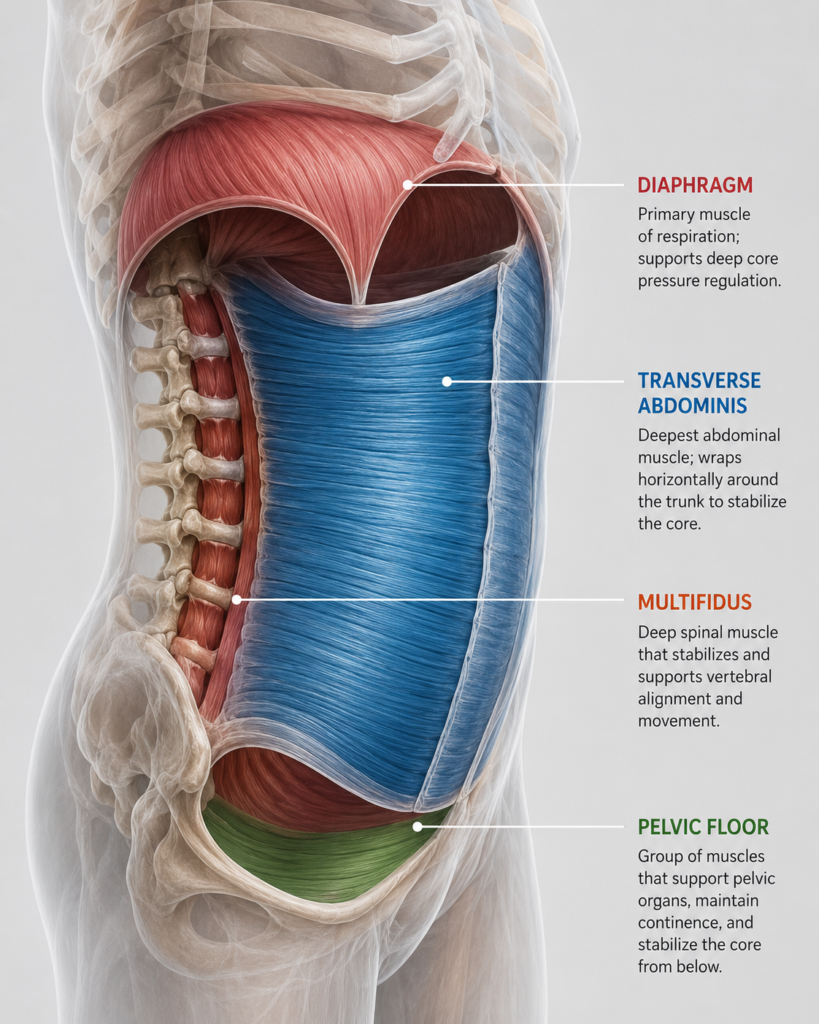
To understand what core strengthening through EMS can do, it helps to first understand what it is working with. The deep core, often called the local stabilizing system, consists of muscles that attach directly to or near the lumbar vertebrae and provide segmental spinal stability: the precise, local control of each vertebral segment during movement.
The primary deep core muscles targeted by EMS core strengthening include:
- The transverse abdominis, which wraps horizontally around the trunk and acts as a natural corset for the spine
- The multifidus, which runs segmentally along the spine, providing inter-segmental stability
- The diaphragm, which provides the superior boundary of the abdominal cylinder, participates in intra-abdominal pressure regulation
- The pelvic floor, which provides the inferior boundary of the abdominal cylinder
The deep core activates in anticipation of limb movement, milliseconds before any arm or leg movement. A healthy deep core pre-activates to stabilize the spine against the forces the limb movement will create. This feedforward activation is automatic in people with healthy core function. It is disrupted in people with chronic low back pain, creating a reactive rather than proactive stability pattern that leaves the spine more vulnerable to injury during movement.
Conventional core exercises, including crunches, sit-ups, and leg raises, primarily recruit the superficial global muscles such as the rectus abdominis and external obliques without consistently activating the deep stabilizing system. People can have extremely strong superficial core muscles and still have poor deep core function. This is exactly the gap that core strengthening is positioned to address.
How EMS Core Strengthening Reaches the Muscles Conventional Exercise Cannot
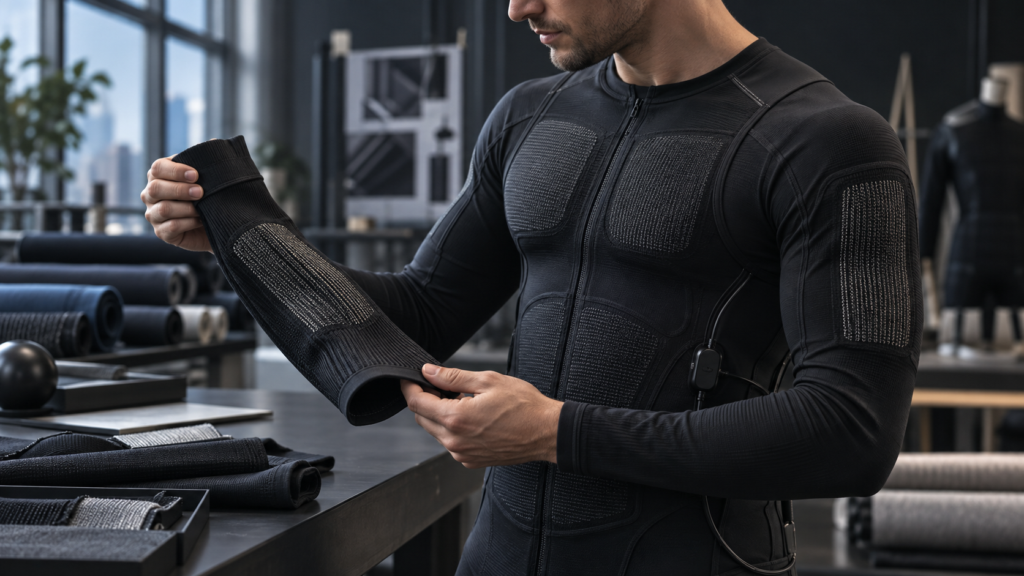
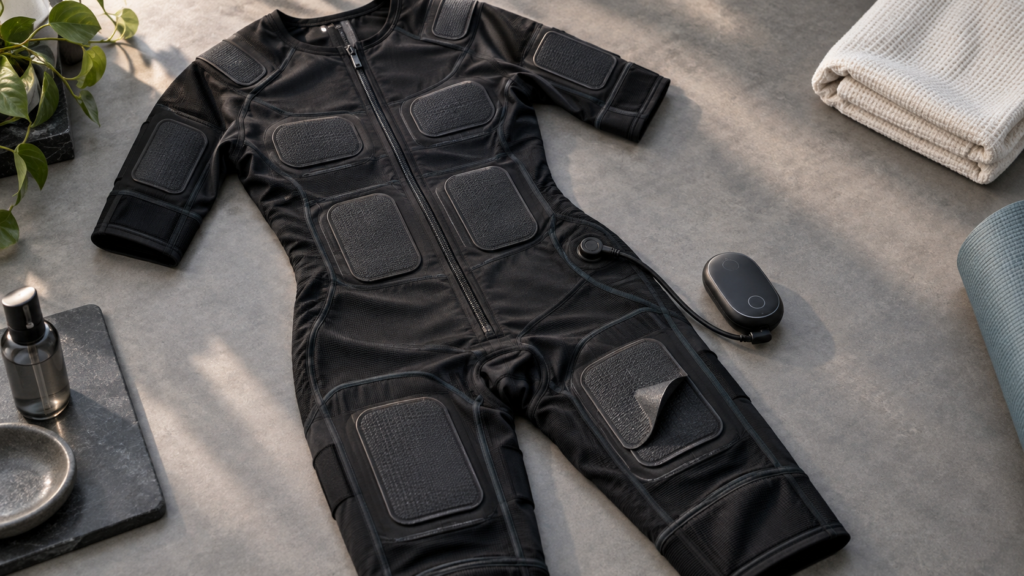
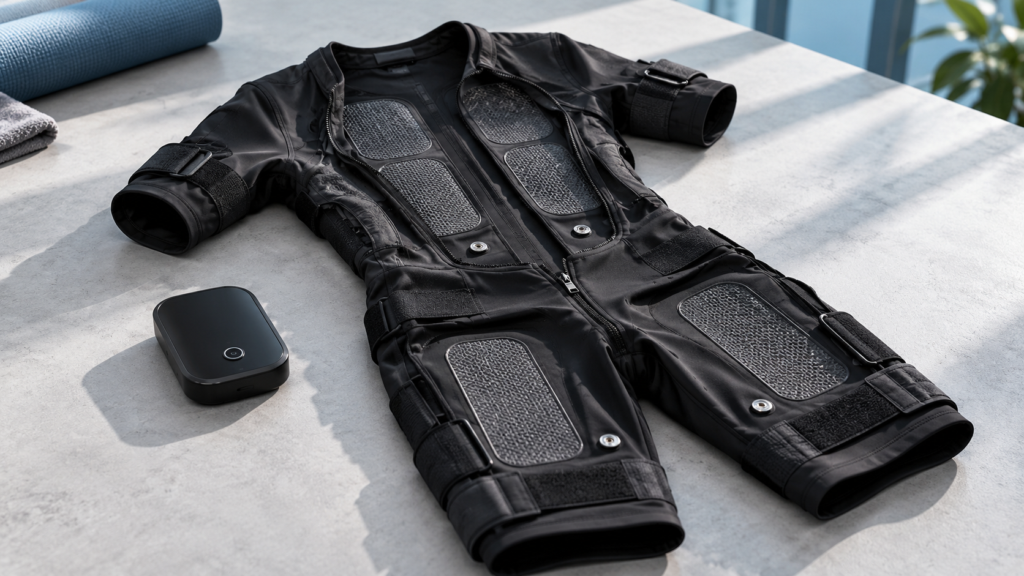
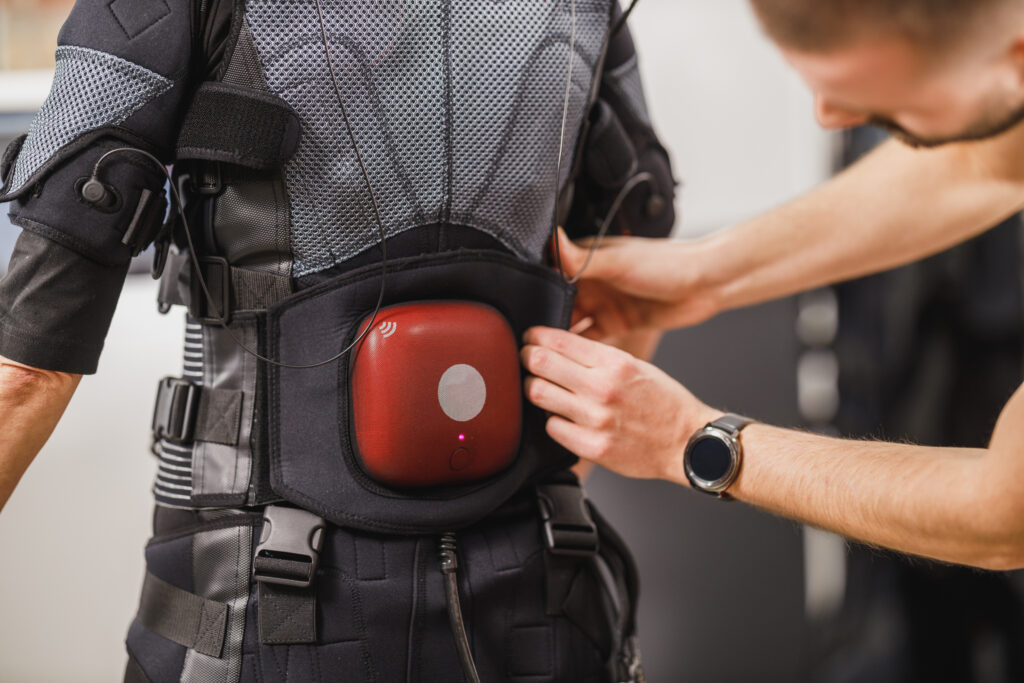
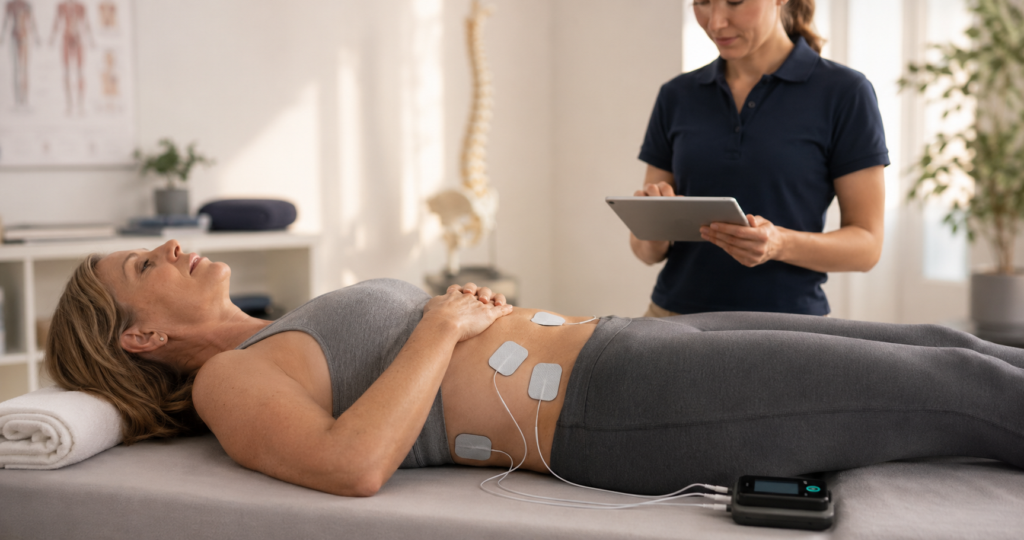
The distinctive value of EMS core strengthening lies in how electrical stimulation interacts with muscle tissue. EMS stimulation of the trunk musculature, applied through whole-body EMS suits or targeted electrode placement, activates both superficial and deep layers of the core musculature. The electrical stimulation penetrates to the muscle fibers regardless of the voluntary activation level, potentially reaching the deep stabilizing muscles that voluntary exercise struggles to consistently engage.
Nussbaum et al. in Physiother Can note that neuromuscular electrical stimulation is particularly effective for activating muscles with impaired voluntary recruitment, which describes precisely the inhibited deep core muscles that EMS core strengthening is designed to address. When the transverse abdominis and multifidus have become inhibited through pain, deconditioning, or disuse, voluntary exercise often cannot overcome the compensation patterns that allow superficial muscles to dominate. EMS core strengthening bypasses those patterns by stimulating the target muscles directly.
Porcari et al. in the Journal of Sports Science and Medicine found that neuromuscular electrical stimulation training produced meaningful improvements in abdominal strength and endurance measures, supporting the case for EMS core strengthening as a legitimate and effective training tool rather than simply a passive recovery modality.
For individuals with poor deep core awareness, EMS core strengthening can also serve as a biofeedback-like tool, demonstrating what activated core musculature feels like and potentially facilitating the learning of voluntary deep core engagement. Some physiotherapists use therapeutic electrical stimulation specifically for this motor learning application in core rehabilitation contexts, precisely because EMS core strengthening can teach the body what proper activation should feel like before voluntary control has been re-established.
EMS Core Strengthening for People With Lower Back Pain
Lower back pain and deep core inhibition have a well-documented bidirectional relationship. Pain disrupts the feedforward activation of the transverse abdominis and multifidus, and that disrupted activation in turn leaves the spine less protected during movement, perpetuating the cycle. EMS core strengthening offers a way to intervene in that cycle by directly activating the inhibited deep stabilizers regardless of the pain-related inhibition patterns.
Dirks et al. (2014) in Acta Physiologica demonstrated that neuromuscular electrical stimulation prevents muscle disuse atrophy during immobilization, a finding directly relevant to EMS core strengthening in populations whose pain has led to reduced core muscle use and consequent atrophy of the deep stabilizing muscles.
For people managing chronic lower back pain, EMS core strengthening is best approached as part of a broader rehabilitation program rather than as a standalone intervention. Working with a physiotherapist who can assess the specific deep core inhibition pattern and design an appropriate EMS core strengthening protocol alongside conventional rehabilitation exercises produces the most meaningful and durable outcomes.
EMS Core Strengthening for Athletes and Active Individuals
EMS core strengthening is not only relevant for rehabilitation populations. Athletes and active individuals who already perform conventional core training regularly can use EMS core strengthening to supplement their program with additional deep muscle activation stimulus, potentially accelerating the development of core stability beyond what conventional training alone achieves.
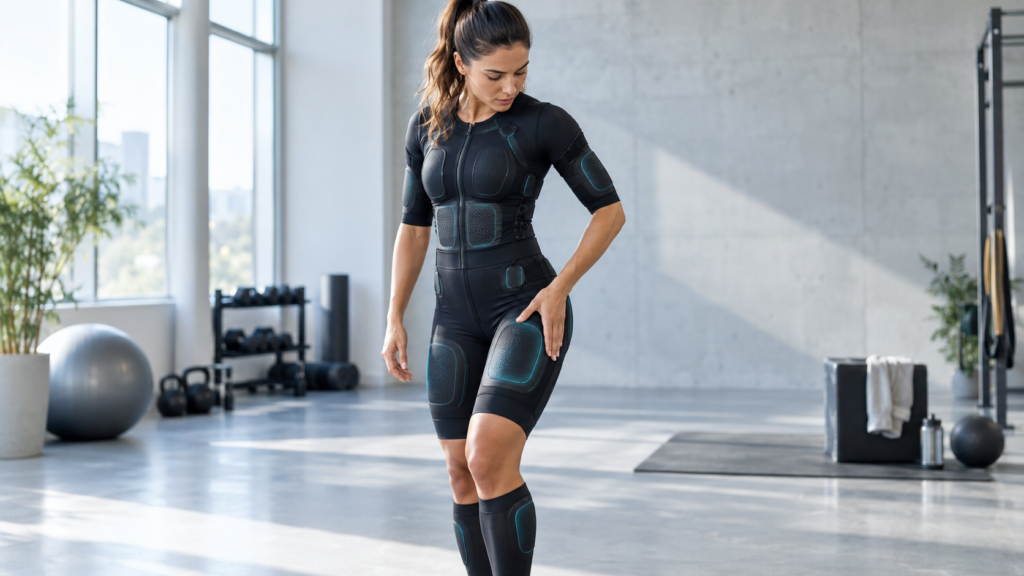
Whole-body EMS training conducted in positions that challenge spinal stability, including standing and light functional movement, provides integrated EMS core strengthening alongside the broader training stimulus. This dynamic application of EMS core strengthening develops the integrated stability that real-world movement and sport demand, rather than simply the isolated muscle activation of passive EMS application.
Filipovic et al. (2016) in the Journal of Sports Science and Medicine demonstrated that whole-body EMS training produced meaningful improvements in strength and performance parameters in elite soccer players, supporting the broader case for EMS core strengthening as a legitimate tool within elite athletic conditioning programs, not just a rehabilitation aid.
For athletes, EMS core strengthening works most effectively when integrated with sport-specific movement patterns rather than applied in isolation. Pre-activation EMS core strengthening before conventional strength sessions may improve the recruitment quality of the deep stabilizers during subsequent exercises, compounding the benefits of both approaches.
EMS Core Strengthening vs. Conventional Core Exercise: How They Compare
EMS core strengthening and conventional core exercise are complementary rather than competing approaches. Understanding what each contributes helps clarify how to combine them effectively.
Conventional core exercises, including Pilates, yoga, and specific rehabilitation movements, develop:
- Motor patterns and proprioceptive awareness that translate to real-world movement quality
- Functional strength through voluntary muscle engagement
- The ability to consciously control and coordinate core muscle activation
EMS core strengthening adds:
- Direct electrical activation that reaches deeper muscle fibers than voluntary exercise consistently achieves
- Stimulation of the transverse abdominis and multifidus regardless of compensation patterns
- A motor learning stimulus that may improve voluntary deep core recruitment over time
For individuals who find conventional core exercises ineffective, perhaps because their deep core is sufficiently inhibited that conventional exercises are still dominated by superficial muscle substitution, EMS core strengthening may provide the activation breakthrough that allows conventional exercise to then be performed with more appropriate deep muscle engagement. The two approaches together provide a more comprehensive core training stimulus than either delivers independently.
Postpartum Core Recovery and EMS Core Strengthening
Postpartum core deconditioning is one of the most common and underserved areas of women’s health fitness. Pregnancy stretches and weakens the deep core musculature, and diastasis recti, the separation of the rectus abdominis along the linea alba, can further impair the mechanical function of the entire abdominal cylinder. EMS core strengthening may support postpartum core rehabilitation by activating the core musculature that postpartum deconditioning and diastasis recti can inhibit.
However, postpartum EMS core strengthening requires careful assessment before beginning. Diastasis recti severity and pelvic floor function must be evaluated by a physiotherapist, as not all EMS core strengthening approaches are appropriate for all postpartum presentations. With appropriate assessment and programming, EMS core strengthening can be a valuable component of a postpartum rehabilitation program that supports the restoration of deep core function over time.
Conclusion
EMS core strengthening offers a genuinely distinctive capability in the core training landscape: the ability to reach and activate the deep stabilizing muscles that conventional exercise consistently underactivates. For rehabilitation populations, active individuals, and elite athletes alike, EMS core strengthening supports the development of true spinal stability that back health and functional movement require.
EMS core strengthening is not a replacement for comprehensive core training, which should include conventional exercises, movement pattern development, and, in some cases, physiotherapy assessment. But as a complement to those approaches, EMS core strengthening provides a meaningful additional stimulus that helps build the deep core foundation that superficial training alone cannot reliably create.
Ready to find the best EMS suit for you? Check out our brand reviews and product reviews to help inform your decision. You can also play with our product comparison tool to find the option that fits your goals and budget.
Frequently Asked Questions
Does EMS work for core strengthening?
Research supports EMS core strengthening as a legitimate and effective training tool. EMS stimulation reaches both superficial and deep core muscles, including the transverse abdominis and multifidus that conventional exercise often underactivates, providing a more comprehensive core training stimulus than voluntary exercise alone.
Can EMS activate the deep core muscles?
Yes. EMS core strengthening stimulation penetrates to deeper muscle layers regardless of voluntary activation level, potentially activating the transverse abdominis and multifidus more consistently than conventional exercises that are often dominated by superficial muscle recruitment. This is one of the most distinctive benefits of EMS core strengthening over conventional methods.
Is EMS better than Pilates for core strengthening?
EMS core strengthening and Pilates serve complementary functions. Pilates develops motor patterns, proprioceptive awareness, and functional core movement. EMS core strengthening provides direct electrical activation that may reach deeper muscle fibers than Pilates exercises consistently achieve. They work well together as components of a comprehensive core training program.
Can EMS help with core weakness after pregnancy?
EMS core strengthening may support core rehabilitation after pregnancy by activating the musculature that postpartum deconditioning and diastasis recti can inhibit. However, postpartum EMS core strengthening requires assessment of diastasis recti severity and pelvic floor function by a physiotherapist before beginning, as not all approaches are appropriate for all postpartum presentations.
How is EMS core strengthening different from doing planks?
Planks primarily develop isometric endurance in the superficial core musculature and require a minimum level of voluntary core activation to perform correctly. EMS core strengthening stimulates the muscles directly regardless of voluntary activation level, potentially reaching the deep stabilizers that planks may miss when compensation patterns allow global muscles to dominate. Both develop different but complementary aspects of core function.