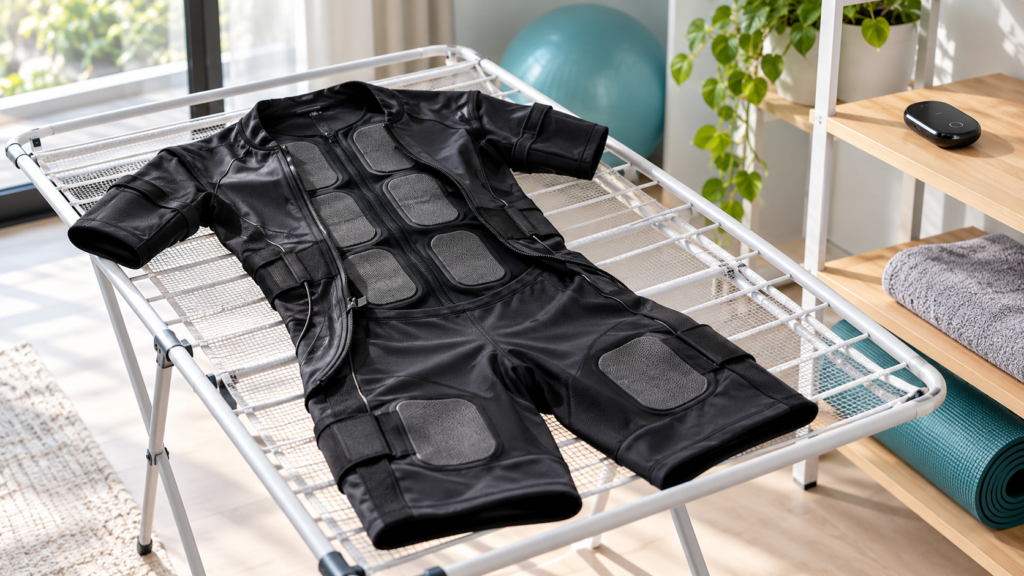
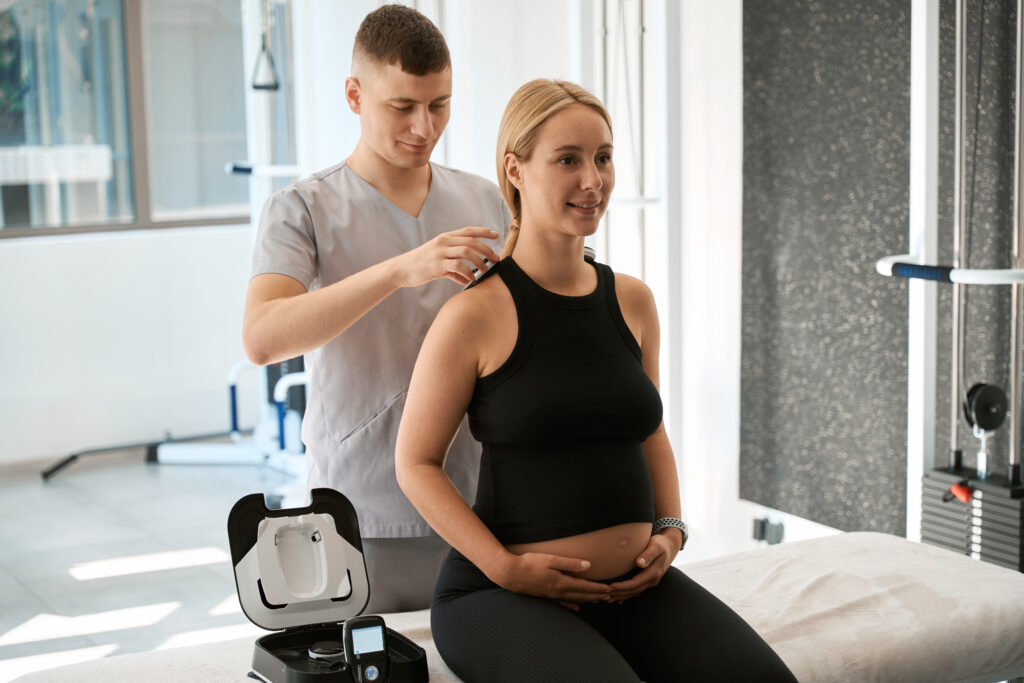
EMS post-pregnancy fitness is a topic that requires careful, evidence-based guidance. The postpartum period presents unique physiological considerations that must shape how EMS training is approached. EMS after baby body recomposition can be beneficial when applied appropriately after adequate recovery. Research into ems for postpregnancy body recomposition what to consider continues to evolve as more studios adopt evidence-based approaches.
EMS post-pregnancy fitness interests many new mothers who are seeking time-efficient, supervised approaches to postpartum body recomposition. EMS’s combination of muscle activation and caloric expenditure addresses the core needs of this population. Understanding ems for postpregnancy body recomposition what to consider is key for any trainer looking to modernize their program.

This article provides an honest examination of EMS training in the postpartum context — the potential value, the essential considerations, the contraindications, and the appropriate timing and approach for new mothers who want to explore EMS as part of their postnatal recovery and body recomposition. The evidence supporting ems for postpregnancy body recomposition what to consider is growing steadily in the professional fitness space.
Postpartum Physiology: Why This Period Requires Special Consideration
EMS post-pregnancy fitness physiological context: the postpartum period involves significant hormonal shifts, tissue repair, and gradual musculoskeletal recovery that affect how the body responds to training stimuli. For coaches exploring ems for postpregnancy body recomposition what to consider, proper protocol design is essential.
Postpartum EMS training timing: the appropriate timing for resuming any exercise program, including EMS postnatal fitness activities, depends on birth type, recovery progress, and medical clearance. Clients asking about ems for postpregnancy body recomposition what to consider deserve clear, evidence-informed guidance.
EMS new mother body recomposition: many postpartum women seek to address abdominal muscle separation (diastasis recti), general deconditioning, and body composition changes. EMS post-pregnancy fitness protocols must address these needs thoughtfully. The practical application of ems for postpregnancy body recomposition what to consider varies depending on goals and client profile.
EMS post-pregnancy fitness contraindication awareness: abdominal EMS at high intensities may affect diastasis recti healing. EMS post-pregnancy fitness protocols should prioritize gentle, progressive abdominal engagement with specialist guidance. Studios investing in ems for postpregnancy body recomposition what to consider report strong client retention and satisfaction.
Potential Benefits and Appropriate Applications: Ems for postpregnancy body recomposition what to consider
EMS post-pregnancy fitness body composition benefits: research on EMS for body composition improvement shows that the muscle activation and metabolic effects of EMS can support postpartum body recomposition goals. Anyone serious about ems for postpregnancy body recomposition what to consider should prioritize certified equipment and trained staff.
EMS postnatal fitness applications: general muscle conditioning, core strengthening, and metabolic support can all be addressed through EMS post-pregnancy fitness when contraindications have been assessed and cleared. The business case for ems for postpregnancy body recomposition what to consider is supported by both research and real-world results.
EMS after baby body recomposition considerations: the EMS protocol intensity and target muscle groups should be adjusted based on individual recovery status, specifically regarding abdominal muscle healing and pelvic floor health. Getting the most from ems for postpregnancy body recomposition what to consider requires consistent protocol and progress tracking.
Essential Contraindications and Considerations
EMS post-pregnancy fitness and diastasis recti: high-intensity abdominal EMS may put inappropriate tension on healing abdominal separation. EMS post-pregnancy fitness protocols should avoid high-intensity abdominal stimulation until the gap has sufficiently closed. Safety remains a top priority in any ems for postpregnancy body recomposition what to consider program.

EMS post-pregnancy fitness timing: for most women with uncomplicated vaginal deliveries, EMS post-pregnancy fitness may be appropriate to resume after 6-8 weeks and medical clearance. Professionals offering ems for postpregnancy body recomposition what to consider benefit from ongoing education and certification.
EMS post-pregnancy fitness caesarean section considerations: surgical delivery requires additional healing time, typically pushing EMS post-pregnancy fitness restart to 8-12 weeks minimum under medical guidance.
Beginning EMS training at very low intensity and progressing extremely conservatively — more so than in the general population — is appropriate for the postpartum context, where the body is still recovering from the profound physical demands of pregnancy and delivery. Working with an EMS trainer experienced with postnatal clients and with the coordination of the medical and physiotherapy team provides the safest pathway to EMS training in this population.
Conclusion
EMS post-pregnancy fitness can be a valuable part of postpartum wellness when approached with appropriate medical guidance, realistic timelines, and protocols adapted to the specific needs of the postpartum body.
For mothers who are cleared for exercise and interested in EMS post-pregnancy fitness, finding an EMS studio with trainers who have specific postpartum exercise knowledge is important for safe and effective programming.
Interested in EMS training for postpartum fitness? Explore our brand reviews and product reviews, or compare options with our product comparison tool.
Frequently Asked Questions
Is EMS training safe after pregnancy?
EMS training may be appropriate after pregnancy for women who have received medical clearance, completed initial postpartum rehabilitation, and had their pelvic floor and core function assessed by a qualified physiotherapist. It is not safe during pregnancy and should not be started before medical clearance postpartum. Conservative intensity and professional guidance are essential.
Can EMS help with postpartum body recomposition?
EMS training may support postpartum body recomposition for appropriately cleared individuals — offering time-efficient conditioning that supports fat loss and lean mass maintenance. The specific postnatal considerations (diastasis recti, pelvic floor, hormonal changes) require professional assessment before EMS training begins.
Does EMS worsen diastasis recti?
High-intensity abdominal EMS stimulation may have implications for individuals with unresolved diastasis recti by increasing intra-abdominal pressure. Assessment of diastasis recti severity and functional impact by a pelvic floor physiotherapist should precede any abdominal EMS training. Not all diastasis recti presentations are equivalent, and individualized guidance is essential.
When can I start EMS training after having a baby?
Medical guidelines generally suggest at least 6 weeks postpartum before beginning structured exercise, with longer recovery for cesarean deliveries or complications. Medical clearance from a healthcare provider, followed by pelvic floor physiotherapy assessment, should precede EMS training. Individual readiness varies and professional assessment determines appropriate timing.
Is EMS training safe while breastfeeding?
EMS training during breastfeeding is not contraindicated from a safety perspective, but the caloric demands of combined EMS training and lactation require adequate nutritional support to maintain milk supply. Staying well hydrated and meeting increased caloric and protein needs during this period is important for both training outcomes and breastfeeding success.