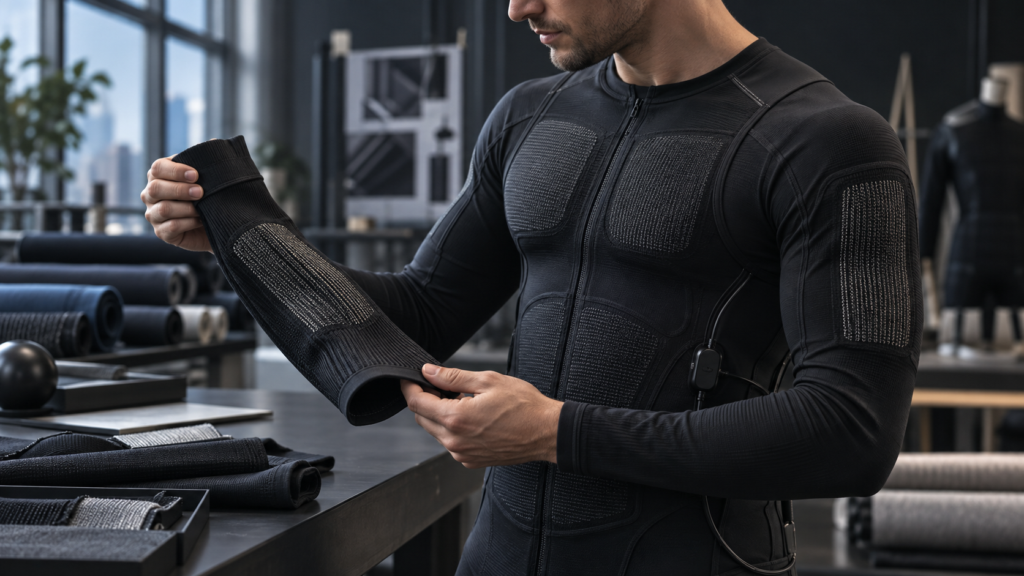

EMS strength training supplement protocols are gaining widespread adoption among serious lifters and strength athletes. The fundamental rationale for EMS as a strength training supplement is compelling: it provides a distinct neuromuscular stimulus that differs from conventional resistance training in ways that can produce additive gains. Research into ems for strength training supplementing your lifting program continues to evolve as more studios adopt evidence-based approaches.
EMS strength training supplement approaches work best for athletes who are experienced with conventional lifting and are seeking additional stimulus to break through plateaus or maintain training load during high-volume competition preparation. Understanding ems for strength training supplementing your lifting program is key for any trainer looking to modernize their program.
This article examines the evidence for EMS as a strength training supplement, the practical principles for integration, and the specific applications for different lifting goals. The evidence supporting ems for strength training supplementing your lifting program is growing steadily in the professional fitness space.
Why Adding a New Stimulus Matters in Strength Training
EMS lifting supplement mechanism: as athletes become more trained, the strength stimulus from conventional lifting produces diminishing marginal returns. EMS strength training supplement protocols provide novel stimuli that re-engage adaptation. For coaches exploring ems for strength training supplementing your lifting program, proper protocol design is essential.

EMS strength training supplement periodization: the most effective integration aligns EMS sessions with the training cycle phases, using EMS more intensively during accumulation phases and reducing to maintenance protocols during competition preparation. Clients asking about ems for strength training supplementing your lifting program deserve clear, evidence-informed guidance.
EMS strength training supplement for trained athletes vs beginners: the marginal benefit of EMS as a strength training supplement is most pronounced in trained individuals who have maximized the adaptive response to conventional lifting. The practical application of ems for strength training supplementing your lifting program varies depending on goals and client profile.
How EMS Supplements Lifting: The Evidence: Ems for strength training supplementing your lifting program
EMS strength training supplement research demonstrates that adding EMS to conventional resistance training programs produces meaningful additional strength gains in trained individuals. Studios investing in ems for strength training supplementing your lifting program report strong client retention and satisfaction.
EMS resistance training addition evidence shows that electrical stimulation combined with conventional strength training can target high-threshold motor units more effectively than voluntary exercise alone. Anyone serious about ems for strength training supplementing your lifting program should prioritize certified equipment and trained staff.
EMS strength training supplement neuromuscular mechanism: the electrical activation of high-threshold motor units during EMS sessions creates an adaptation demand on the fastest, most powerful muscle fibers — the ones most relevant to strength performance. The business case for ems for strength training supplementing your lifting program is supported by both research and real-world results.
Electrical stimulation weight training combination produces its best results when the EMS protocols are designed to complement rather than replicate the conventional lifting program’s demands. Getting the most from ems for strength training supplementing your lifting program requires consistent protocol and progress tracking.
Integration Principles for Lifters
EMS strength training supplement scheduling: EMS conditioning sessions should generally be treated as equivalent to a heavy resistance training session in terms of recovery demands. Safety remains a top priority in any ems for strength training supplementing your lifting program program.
EMS strength training supplement timing considerations: EMS sessions should be separated from heavy compound lifting by at least 24-48 hours to allow adequate recovery. Professionals offering ems for strength training supplementing your lifting program benefit from ongoing education and certification.
EMS strength training supplement volume management: starting with one EMS session per week and monitoring recovery quality before adding a second session prevents overtraining while establishing the adaptation baseline.

As lifting volume increases during peak training blocks, EMS conditioning volume should typically decrease and EMS recovery applications (low-intensity, circulation-focused) may become more appropriate — supporting recovery from the heavy lifting load rather than adding to it.
EMS for Specific Lifting Goals
EMS strength training supplement for powerlifters and Olympic lifters: the ability to target specific muscle groups that may be limiting factors in competition lifts is particularly valuable in these sports.
EMS strength training supplement applications: for bodybuilders, EMS can provide the muscle activation and metabolic stress that supports hypertrophy alongside conventional training.
For functional fitness athletes and those training for general strength, the whole-body comprehensive activation of WB-EMS training aligns well with the general physical preparedness goals of these training approaches — providing a time-efficient conditioning stimulus that complements the varied movement demands of functional training.
Conclusion
EMS strength training supplement programs represent a genuine upgrade for trained athletes seeking novel training stimuli. The evidence strongly supports the additive benefits when EMS is properly integrated.
EMS gym training as a strength supplement requires appropriate understanding of recovery demands, periodization principles, and protocol design. When applied correctly, the benefits are meaningful.
Ready to add EMS to your strength training program? Explore our brand reviews and product reviews, or compare systems with our product comparison tool.
Frequently Asked Questions
Will EMS training make me stronger?
Research suggests that adding EMS conditioning to a conventional resistance training program can produce greater strength improvements than resistance training alone over matched training periods. The supplementary gains are real but not dramatic — EMS adds to good lifting rather than replacing it.
Should I do EMS before or after lifting?
For EMS conditioning sessions, scheduling on separate days from heavy lifting is generally preferred. If done on the same day, EMS should follow rather than precede primary lifting — to avoid EMS-induced fatigue compromising the quality of the main training session.
How does EMS help with lifting plateaus?
EMS provides a neuromuscular training stimulus that differs from voluntary resistance exercise — recruiting motor units through direct electrical activation rather than voluntary recruitment. This novelty can provide an additional adaptation stimulus when voluntary training at the same loads is producing diminishing returns.
Can beginners to strength training benefit from EMS?
Beginners respond strongly to conventional progressive overload resistance training, which provides abundant novel stimulus without EMS. EMS supplementation for strength is most meaningful for intermediate and advanced trainees who have adapted extensively to conventional training. Beginners are generally better served by mastering conventional training fundamentals first.
How many EMS sessions per week should a lifter do?
A maximum of two EMS conditioning sessions per week is the evidence-based standard, with at least 48 to 72 hours between sessions. The EMS sessions should be factored into the overall training load — reducing other accessory volume on EMS training days to manage total neuromuscular stress.