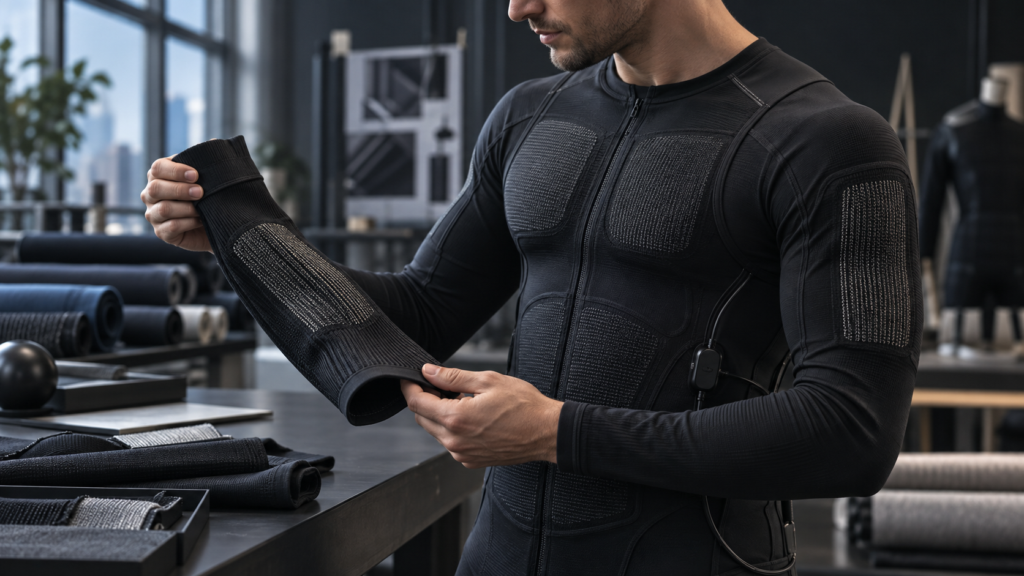

EMS training has a real and growing evidence base, but honest information about any training method includes acknowledging what it cannot do. The fitness industry has a tendency to oversell new technologies, and EMS has not been immune to this. Claims that EMS sessions replace hours of conventional training, melt fat effortlessly, or produce rapid, dramatic physical transformations are not supported by the available research. Understanding EMS training limitations before you invest time, money, or expectation into a program is not pessimistic. It is the foundation of a productive experience.
EMS Training Limitations Start Here: It Is a Supplement, Not a Replacement
One of the most important EMS training limitations to understand upfront is that whole-body EMS is best used as a supplement to a broader fitness routine, not a complete replacement for one. Current research does not support the idea that EMS training alone, performed in isolation from other physical activity and healthy lifestyle habits, produces the same outcomes as a comprehensive exercise program.
Regular physical activity provides a wide range of adaptations that sit outside EMS training limitations but are still essential to overall health:
- Cardiovascular fitness development
- Bone loading and density maintenance
- Coordination and motor skill development
- Varied metabolic training
- The hormonal and psychological benefits of sustained aerobic effort
EMS can contribute meaningfully to overall fitness when used alongside these forms of activity. But it cannot stand in for them entirely, and anyone approaching it with that expectation is likely to be disappointed.

What EMS Cannot Do: Cardio and Skill Development
One of the clearest EMS training limitations is what the technology simply does not address. Cardiovascular fitness, meaning the adaptation of the heart, lungs, and vascular system to sustained aerobic effort, is not meaningfully developed by standard whole-body EMS protocols. EMS sessions produce primarily neuromuscular and muscular adaptations. Cardio is not one of them.
Some research has explored higher-frequency EMS protocols combined with aerobic movements, but the cardiovascular benefits of EMS remain modest compared to dedicated aerobic training. If cardio fitness is a goal, this is a significant EMS training limitation to factor into your planning.
EMS also does not develop the movement skills, coordination, balance, or sport-specific fitness that come from purposeful practice of sport or functional activity. A whole-body EMS session cannot replace the training value of swimming, cycling, martial arts, or team sport practice for the physical competencies that those activities build. EMS is a muscular activation and conditioning tool, and one of its core EMS training limitations is that it should be evaluated and used as exactly that, nothing more.
The Cost and Accessibility Barrier
A practical EMS training limitation for many people is cost. Professional EMS studio sessions are typically priced significantly higher than conventional gym memberships, often ranging from $50 to $150 or more per session, depending on location and market. This reflects the equipment cost, the one-on-one or small-group trainer attention, and the overhead of running a specialized studio.
For most people, this makes EMS training a once- or twice-weekly supplement rather than a daily training method, which in turn limits the total training volume EMS can contribute to a fitness program over time. This cost barrier is one of the more practical EMS training limitations that does not get discussed enough in marketing materials.
Consumer-grade home EMS suits have made the technology more accessible at the point of purchase, but they come with their own limitations, particularly the absence of professional calibration and supervision, which affects both safety and training quality.
Realistic EMS Expectations: Results Take Time
EMS training, like all forms of exercise, produces adaptations through repeated stimulus and recovery cycles. Systematic reviews on whole-body EMS and body composition and muscle strength outcomes consistently show that meaningful results require a commitment of multiple weeks to months, combined with appropriate nutrition, adequate sleep, and general physical activity.
This is not an EMS training limitation unique to EMS. It applies to every legitimate training method. But it is worth stating clearly because EMS marketing sometimes implies faster results than the evidence supports. Realistic expectations look like this:
- Several weeks of consistent sessions before noticeable adaptation
- Results that build gradually, not dramatically, after a handful of sessions
- Outcomes that depend heavily on supporting habits like nutrition and sleep
- Greater benefit when EMS is paired with other physical activity rather than used alone
People who approach EMS training as one part of a consistent, broader wellness routine are far more likely to find it genuinely useful than those expecting a shortcut.
EMS Training Limitations Around Eligibility: Not Suitable for Everyone
Unlike a walk in the park or gentle yoga, EMS training is not a universally accessible activity. One of the more serious EMS training limitations is its list of contraindications, including implanted electronic devices, epilepsy, pregnancy, active cancer in stimulated areas, and certain cardiac conditions. The 2023 international guideline for whole-body EMS by Kemmler et al. outlines these contraindications in detail and makes clear that proper health screening is a non-negotiable part of any responsible EMS program.
This is a real limitation on the universal applicability of EMS training. The responsibility for appropriate screening lies with both the studio and the user, and users need to understand that screening exists for meaningful reasons, not as a formality.

The Research Is Still Developing
Another of the honest EMS training limitations worth naming is that the research base, while growing, is not yet as extensive or uniform as the literature on conventional resistance training. A 2023 network meta-analysis on EMS and athletic performance reflects the progress being made, but questions about optimal protocol design, long-term outcomes, and comparative effectiveness in specific populations remain areas of active research rather than settled science.
This is not a reason to dismiss EMS training. Early and intermediate research often informs useful practice. But it is a reason to approach strong marketing claims with healthy skepticism and to rely on evidence-based guidance rather than anecdotal promises.
Conclusion
EMS training is a genuinely valuable tool with a real evidence base, but its limitations are equally real and worth understanding clearly before you begin. It works best as part of a broader approach to fitness, not as a standalone solution. Its benefits are most apparent with consistent use over time, and its appropriateness is conditional on good health screening.
Understanding these limitations is not pessimistic; it is the foundation of using EMS training in a way that is likely to produce the outcomes you are actually looking for. If you are ready to take the next step in your EMS journey, check out our product and brand review pages and try out our product comparison tool.
Frequently Asked Questions
Will I definitely see results from EMS training?
EMS training can produce meaningful results when used consistently and supported by good nutrition and general lifestyle habits. However, individual outcomes vary, and there are no guarantees with any training method. Understanding EMS training limitations around timeline and consistency before you begin is essential.
Can EMS replace my gym membership?
EMS training does not replicate the full range of benefits a comprehensive gym program provides, particularly cardiovascular training, skill development, and training variety. This is one of the central EMS training limitations to keep in mind. Most EMS trainers recommend using it as a complement to, not a replacement for, broader exercise habits.
Is EMS training worth the cost?
It depends on your goals, budget, and how you integrate EMS into your overall fitness approach. For people with genuine time constraints who use EMS as a quality supplement to an active lifestyle, many find the value reasonable. For those hoping it will replace all other fitness activities, the cost-benefit calculation is less favorable.
Why does my studio limit me to one or two sessions per week?
The 48 to 72-hour recovery window between EMS sessions reflects the significant muscular activation each session produces. Exceeding this recovery period, particularly for beginners, increases the risk of excessive soreness, overtraining, and in extreme cases, adverse events like rhabdomyolysis.
Can EMS training help with cardio fitness?
Standard whole-body EMS protocols do not meaningfully develop cardiovascular fitness. This is one of the more commonly misunderstood EMS training limitations, and it is an important part of setting realistic expectations from the start.