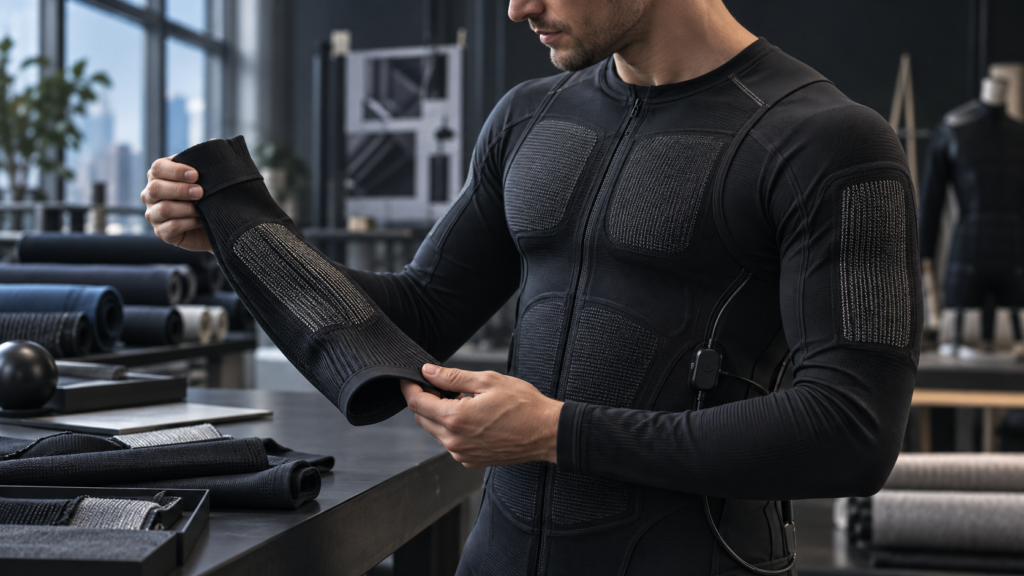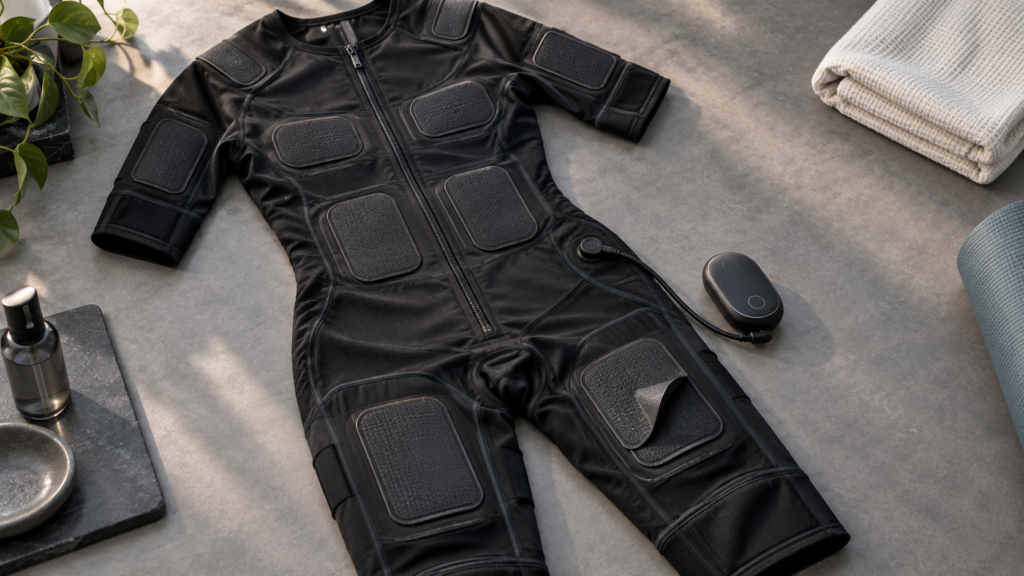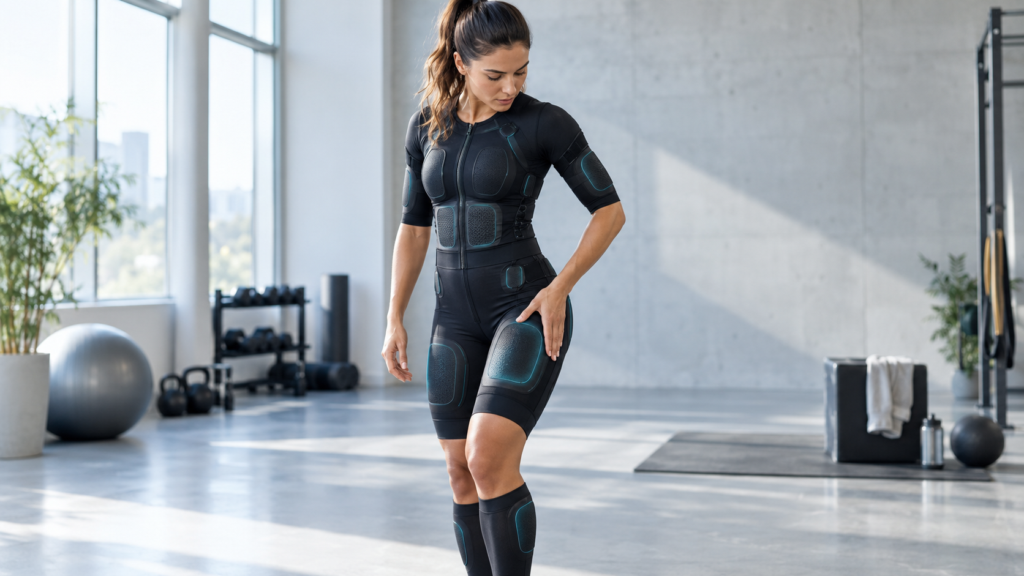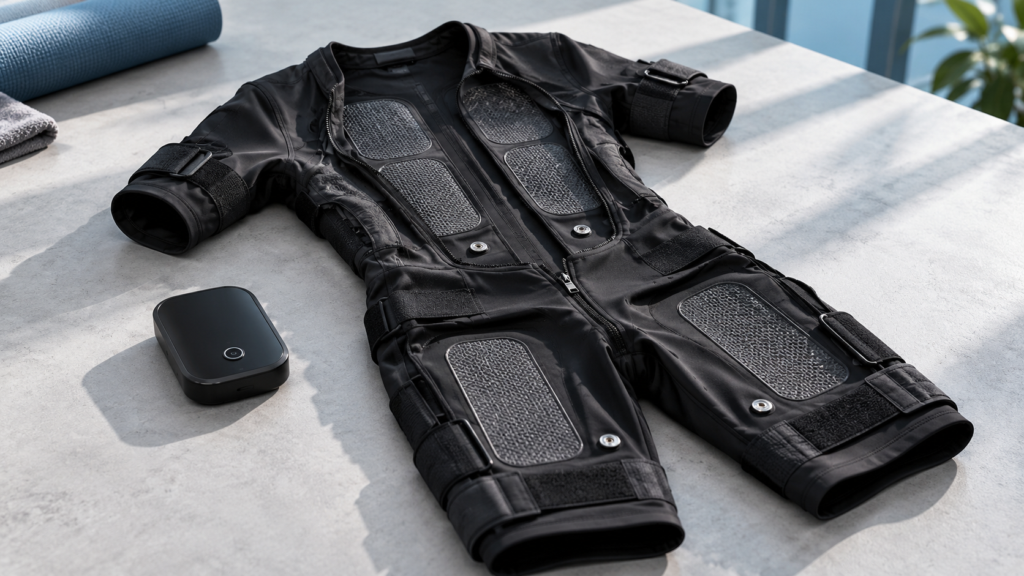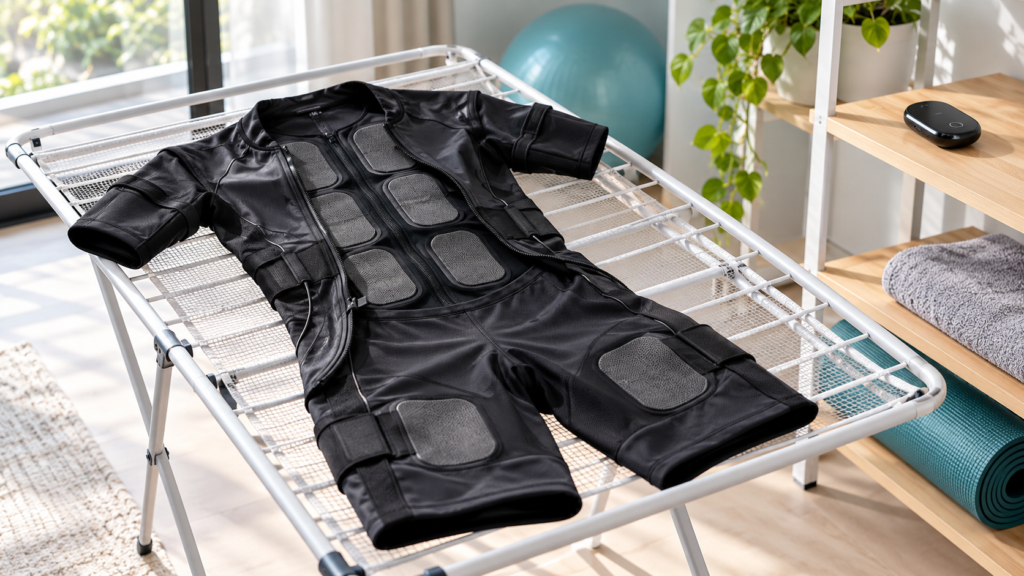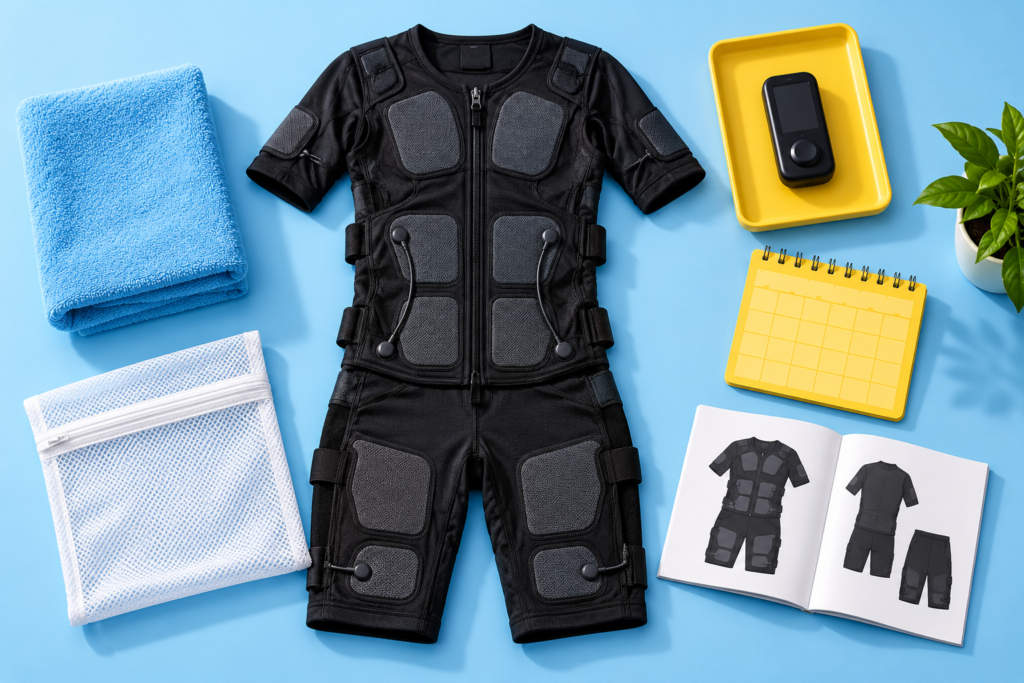
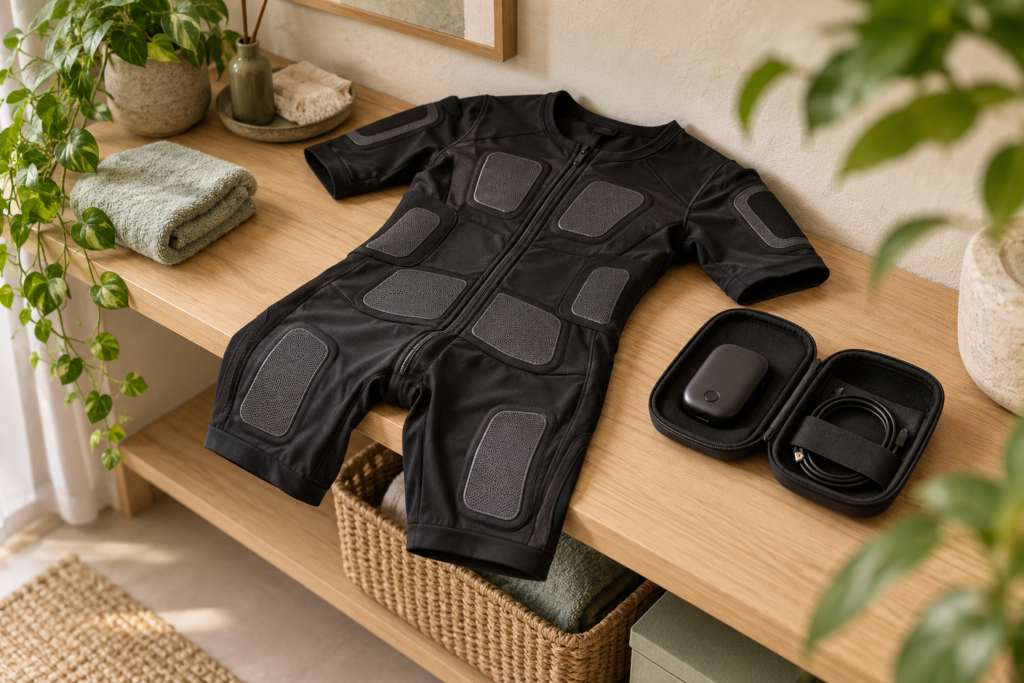
An EMS suit is both clothing and electrical equipment. Putting it in a gym bag while damp can encourage odor and residue, stress conductive panels, and expose connectors or controllers to moisture. Correct storage begins with the care label and ends in a dry, moderate environment where the garment is not crushed or sharply folded.
Follow the exact manufacturer instructions
Suit materials and electronics differ. Some garments are machine-washable after the controller is removed; others require hand washing. Some can be hung; others should be dried or stored flat.
Use this article as a decision checklist, not a replacement for the product manual. If a recommendation conflicts with the label, follow the manufacturer.
Remove electronics before storage
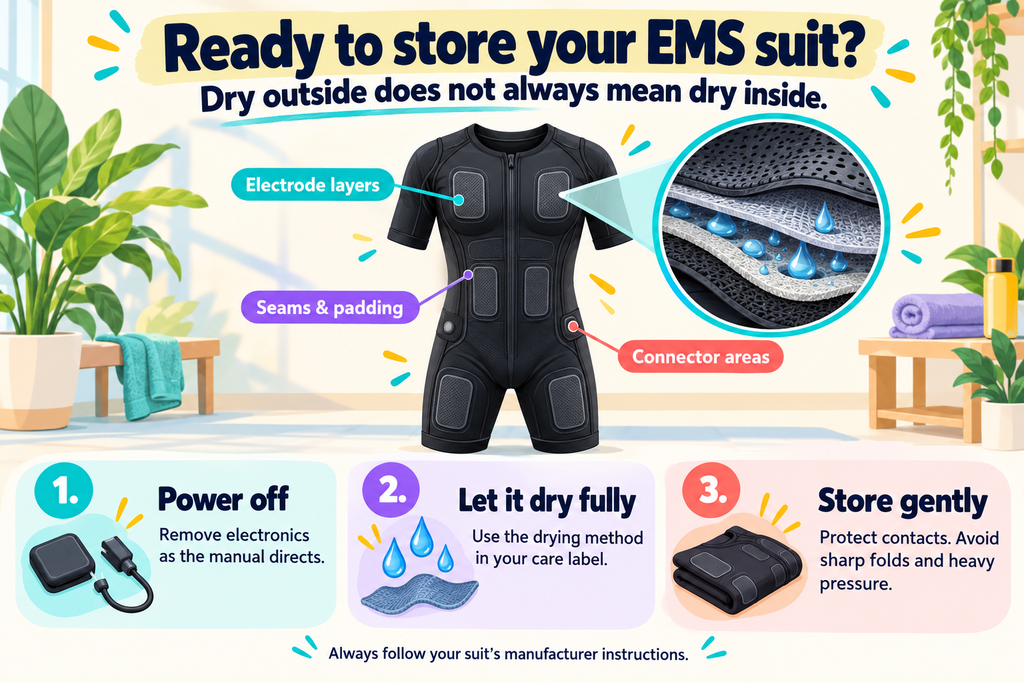
Detach the power box, controller, cables, or battery only in the sequence the manual specifies. Ensure stimulation is off before removal.
Do not leave a removable controller attached to a damp suit. Moisture and residue can reach contacts, while the controller’s weight can strain the attachment if the garment hangs.
Store electronics separately in a dry protective case. Avoid placing metal objects where they can bridge exposed contacts.
Dry the garment completely
A suit that feels dry outside may retain moisture in electrode layers, seams, padding, or connectors. Allow the full drying time specified by the manufacturer.
Do not accelerate drying with:
- A radiator or space heater.
- A hair dryer.
- Direct high heat or prolonged sun.
- A tumble dryer unless explicitly permitted.
- Wringing or twisting conductive panels.
Heat and mechanical stress can damage elastic fibers, coatings, laminations, and electrical paths. The planned EMSSuits guide to drying an EMS suit provides a complete drying process.
Avoid tight folds through electrodes
A hard crease repeated through the same conductive panel can stress coated fabric, yarns, printed traces, or internal wiring. If the manual allows folding, use broad, loose folds that do not pinch connectors.
Do not place heavy gym equipment on top of the suit. Compression during wear is distributed around the body; crushing a folded electrode under a weight is a different mechanical load.
Hanging vs flat storage
Hanging improves airflow and avoids folds, but a narrow hanger can stretch the shoulders or let a controller attachment pull on the fabric. Use a broad, smooth hanger only when the brand permits hanging.
Flat storage supports the garment evenly. Choose a clean shelf or ventilated container large enough to avoid sharp creases. Never seal a suit until it is fully dry.
Choose the right environment
Store the system away from:
- Bathrooms, damp basements, or condensation.
- Hot vehicles and direct sunlight.
- Freezing conditions outside the rated range.
- Dust, oils, cleaning chemicals, and salt air.
- Pets and sharp objects.
- Children who may access the controller.
Manufacturer temperature and humidity ranges should guide long-term storage.
Why moisture, heat, and strain age the system
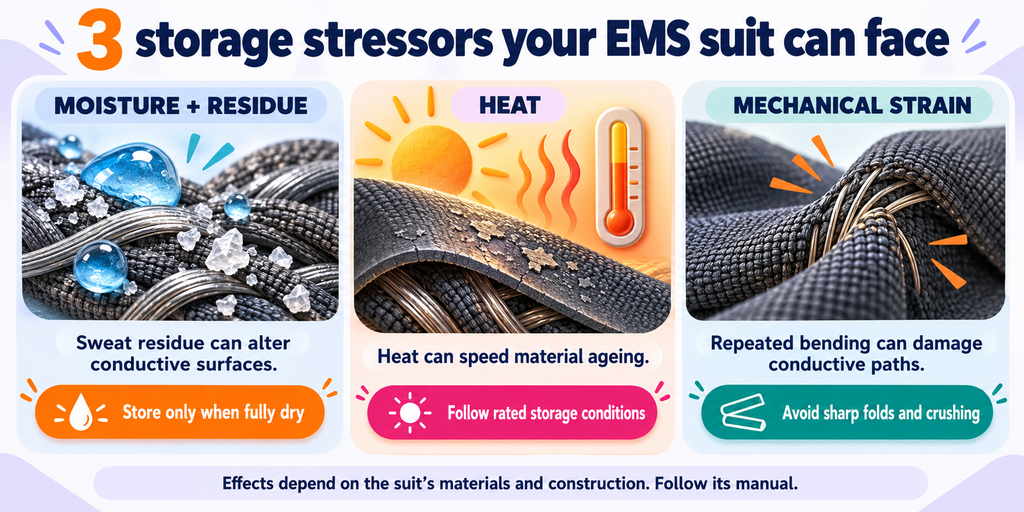
The relevant failure mechanisms are material-specific. Residual water and sweat contain ions that can lower surface resistance while wet and leave hygroscopic or corrosive deposits after evaporation. Repeated exposure can change the resistance and wettability of silver-coated conductive textiles. Oxygen-, sulfur-, and chloride-containing environments may also alter metallic surfaces, while trapped moisture supports odor-producing microorganisms in ordinary textile layers.
Heat accelerates many chemical aging reactions and can soften adhesives or affect elastomer recovery. Mechanical aging is different: a tight fold concentrates tensile and compressive strain along one line, while hanging a wet, heavy garment creates sustained load at shoulders, seams, and connector mounts. Conductive pathways can remain electrically continuous until enough filaments, coatings, or junctions fail, so visual appearance alone is an incomplete test.
Published e-textile studies help identify these mechanisms but cannot supply a universal shelf life for EMS suits. Textile construction, conductor material, encapsulation, electrode function, storage climate, and manufacturer qualification differ. Treat laboratory durability data as an explanation for conservative storage—not permission to override the product’s rated conditions.
Care for connectors
Inspect contacts after the suit dries. Leave protective caps in place if supplied. Do not wrap a cable tightly around a controller or bend it at the strain relief.
Corrosion, discoloration, a loose snap, or a port that contains residue deserves service advice before the next session. Do not scrape contacts with a metal tool.
Store batteries responsibly
Rechargeable lithium-ion controllers should be stored within the temperature and charge guidance in their manual. Long-term storage rules vary; do not assume every battery should remain at 100% or be completely discharged.
Check a stored controller periodically for swelling, leakage, heat, or enclosure distortion. Do not charge a damaged battery.
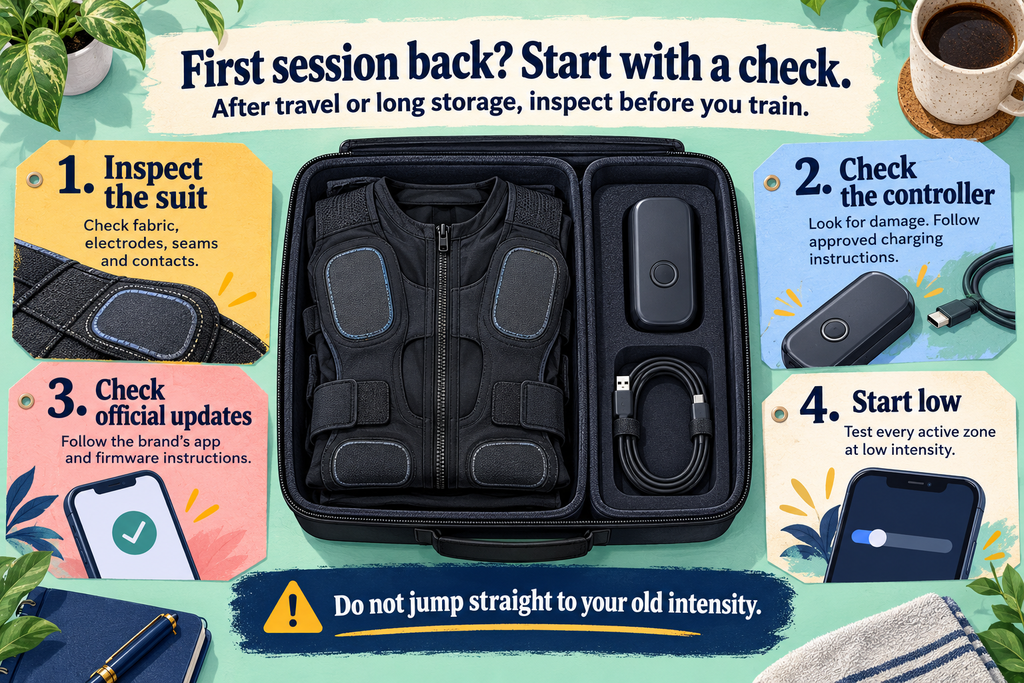
After travel or long storage
Before reuse:
- Inspect fabric, electrodes, seams, and contacts.
- Confirm the controller condition and approved charge.
- Install current app or firmware only through official instructions.
- Perform the EMS pre-session equipment check.
- Test every active zone at a low level.
Do not begin at the last intensity used months earlier. User conditioning and electrode contact may have changed.
Keep a simple equipment inventory
Store approved accessories with the system so a missing cable is not replaced by an unverified substitute. A small inventory can list the controller, approved charger, garment, base layer, protective caps, laundry bag, and current manual.
Label studio equipment without covering vents, indicators, contacts, or conductive fabric. Keep service dates and replacement parts in the equipment record rather than writing on electrode panels. If multiple suits are stored together, separate damp returns from clean, fully dry equipment and prevent controllers from being mixed between incompatible garment generations.
Frequently asked questions
Can I leave an EMS suit in a gym bag?
Only briefly for transport and only when the equipment is protected. Remove it promptly, dry it fully, and store it in a ventilated location.
Should an EMS suit be stored folded?
Follow the manual. If folding is allowed, avoid sharp, repeated creases through electrodes and wiring.
Can I store the controller attached?
Many removable systems should be separated, particularly while the garment dries. Use the exact manufacturer instructions.
How should I store it for several months?
Clean and dry the garment, protect connectors, use the stated temperature and humidity range, and follow the controller’s long-term battery guidance.
The practical takeaway
Store an EMS suit only after it is clean and fully dry. Remove electronics as instructed, protect contacts, avoid hard folds and heavy pressure, and choose a moderate, ventilated environment.
Before the next session—especially after travel or long storage—inspect and test the system at low output. Good storage preserves hygiene, garment fit, conductive areas, and connector reliability.