
Maybe you took a few weeks off from the gym. Work got busy, you went on vacation, you got sick, or you simply fell out of your normal routine.
Then you finally get back to it.
You grab a weight that used to feel normal, and suddenly it feels a lot heavier than you remember.
It can make you wonder how much strength you actually lost. And if you look the same in the mirror, it can be even more confusing. How can you feel weaker if your muscles don’t look much smaller?
There’s a good reason for that.
Muscle loss from inactivity is not only about your muscles getting smaller. Your brain, nerves, and muscles all have to work together to produce strength. When you stop challenging that system, your body starts to adjust.
Some of those changes can happen sooner than you might think.
That doesn’t mean a week away from the gym destroys all your progress. There’s a big difference between taking a break from training and not using a muscle at all.
Understanding that difference can tell you a lot about muscle loss from inactivity, why you can feel weaker so quickly, and what you can do to keep your muscles working.
Strength Is About More Than Muscle Size
It’s easy to connect strength with muscle size.
Build bigger muscles, and you can become stronger. Lose muscle, and you can become weaker.
That’s true, but it’s only part of the story.
Think about what has to happen when you pick up something heavy.
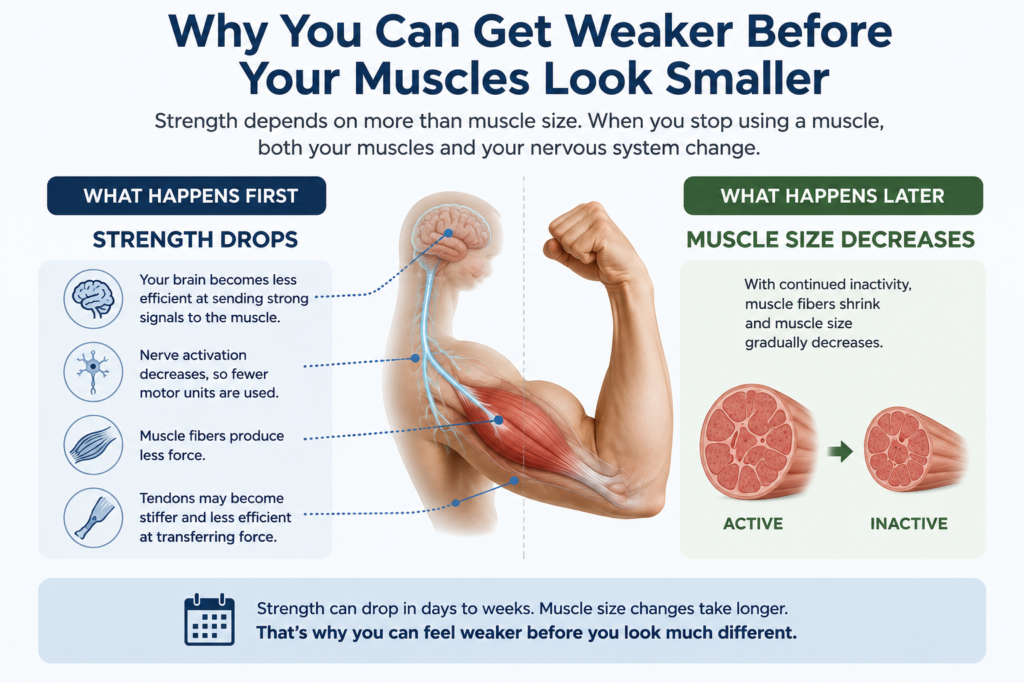
Your brain sends signals through your nerves. Those signals tell your muscles to contract. Your muscles then have to create enough force to move the object.
All of this has to work together.
That’s why researchers often talk about the neuromuscular system. It’s simply the way your nervous system and muscles work together.
And when you stop using a muscle, both parts of that system can change.
A review of 40 studies looked at what happens when an arm or leg is kept from moving normally. Researchers found that muscle size decreased, which isn’t surprising.
But strength generally dropped more than muscle size did. Researchers also found changes in the nervous system’s ability to activate the muscles.
That’s important when you’re trying to understand muscle loss from inactivity. You might look in the mirror and think your muscles look about the same, even though you don’t feel as strong as you did before.
You can get weaker before you look much smaller.
The mirror can show you the size of a muscle. It can’t show you how well your brain, nerves, and muscles are working together to produce force.
Your Body Gets Used to What You Ask It to Do
One of the useful things about your body is how well it adapts.
Lift weights regularly and your body has a reason to get better at lifting weights.
Walk every day and your body gets used to walking.
Train for a sport and your body gets better at the movements that sport requires.
But adaptation works in the other direction too.
When you stop giving your muscles the same amount of work, your body starts adjusting to that lower level of activity.
This is where the old idea of “use it or lose it” has some truth behind it.
That phrase can sound more dramatic than it needs to be, though.
Your body doesn’t suddenly start getting rid of all your muscle because you skipped the gym for a few days. You’re also using your muscles more often than you probably realize.
Every time you stand up, walk across a parking lot, climb stairs, carry groceries, or pick something up, you’re using muscle.
The bigger changes tend to happen when muscle use drops much more.
And that’s where the research on muscle loss from inactivity gets interesting.
How Fast Does Muscle Loss From Inactivity Happen?
There isn’t one answer that applies to everyone.
It depends on how inactive you become, how long that lasts, which muscles we’re talking about, your age, how active you were before, and whether you’re still going about your normal daily life.
Researchers have learned a lot about muscle loss from inactivity by studying bed rest.
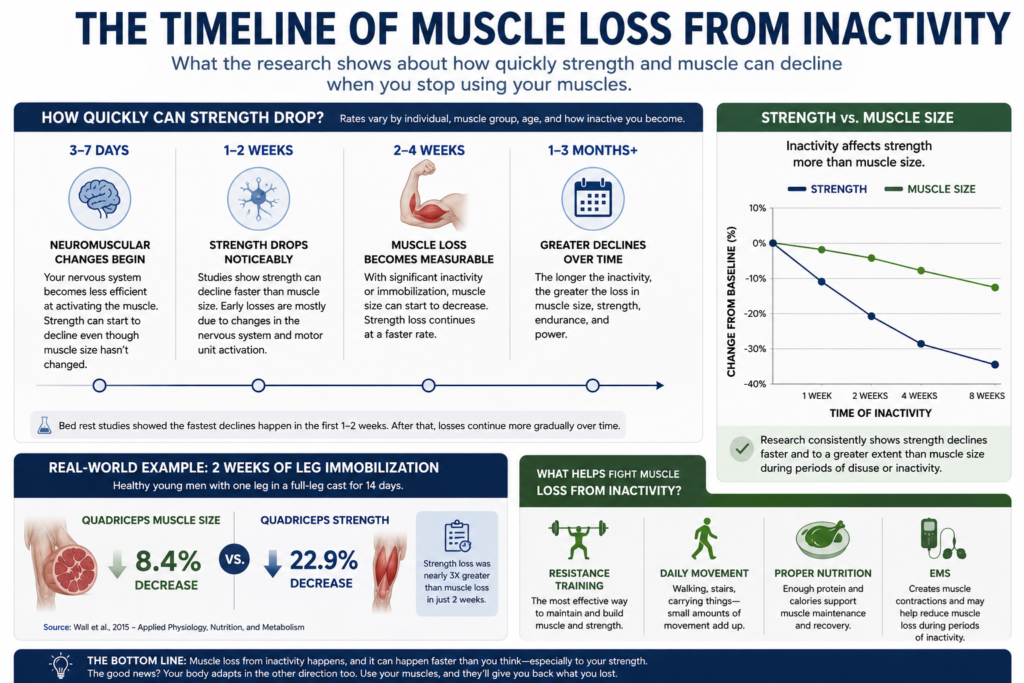
One large analysis combined data from 318 healthy adults who went through periods of bed rest lasting anywhere from five to 120 days.
They found that muscle size and strength dropped fastest during the early stages of bed rest. Strength also fell faster than muscle size during the first part of the period.
Before you look at that research and worry about the last five days you skipped the gym, there’s an important difference.
Bed rest is not the same as taking a break from working out.
If you stop lifting for a week but still go to work, walk around, stand up throughout the day, take the stairs, and live normally, your muscles are still getting work.
Someone confined to bed is removing much more of that normal work.
Bed-rest studies give researchers a way to see what muscle loss from inactivity can look like when normal movement drops dramatically. They don’t tell us exactly what will happen to you after a week away from the gym.
That’s an important difference.
What Happens When You Really Stop Using a Muscle?
A leg cast gives us an even clearer example.
In one immobilization study, researchers had 12 healthy young men keep one leg immobilized in a full-leg cast for two weeks.
After 14 days, the size of the quadriceps had fallen by about 8.4%.
Their quadriceps strength had fallen by about 22.9%.
Again, don’t turn that into “two weeks without the gym makes you 23% weaker.”
These men weren’t simply taking time away from squats.
Their legs were immobilized.
But look at the difference between those two numbers.
The muscle became smaller, but the loss of strength was much greater.
That’s one of the clearest examples of why strength can’t be explained by muscle size alone.
It also shows why muscle loss from inactivity can be a little misleading as a phrase. What you lose isn’t always just muscle tissue. Your ability to produce strength can change too.
Why Can You Get Weaker Before Your Muscles Look Smaller?
Your muscles don’t work by themselves.
Your nervous system has to tell them what to do.
Research on muscle immobilization has found that the amount of muscle someone loses doesn’t completely explain the amount of strength they lose.
Changes can also happen in the signals coming from the nervous system, the muscle fibers themselves, tendons, and other parts of the system used to create force.
You don’t need to understand every part of that process to understand the larger point.
Being strong requires more than having muscle. You also need to be able to use that muscle well.
That’s why muscle loss from inactivity may show up as a drop in what you can do before you notice a major change in how your body looks.
And it raises an interesting question.
If muscles benefit from being activated and made to contract, does every contraction have to come from normal movement?
Not necessarily.
This Is Where EMS Gets Interesting
Normally, a muscle contraction starts with you.
You decide to bend your leg, lift a dumbbell, or stand up. Your nervous system sends signals to the nerves controlling the muscles you need. Those muscles contract, and you move.
Electrical muscle stimulation, or EMS, gives us another way to create that contraction.
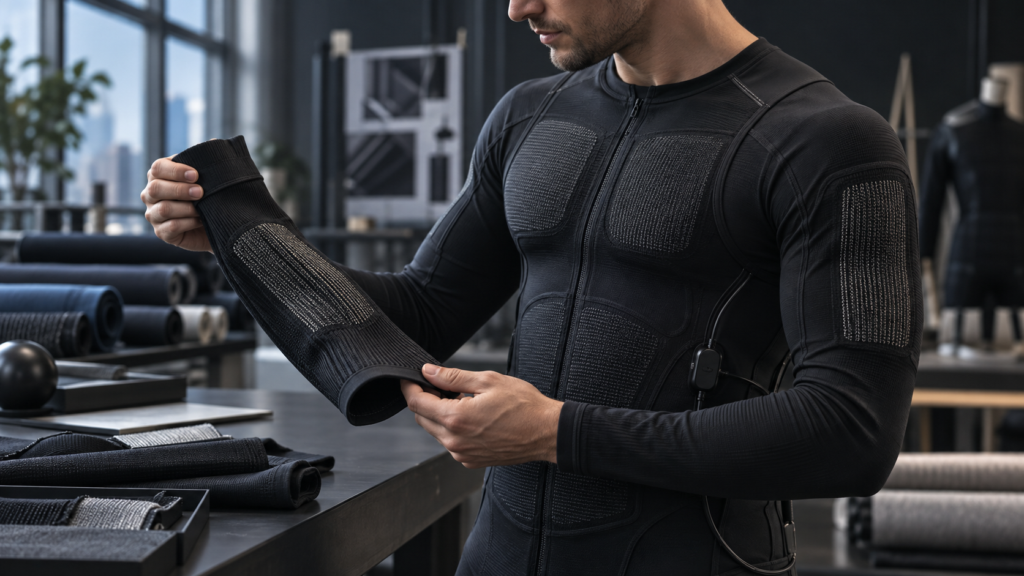
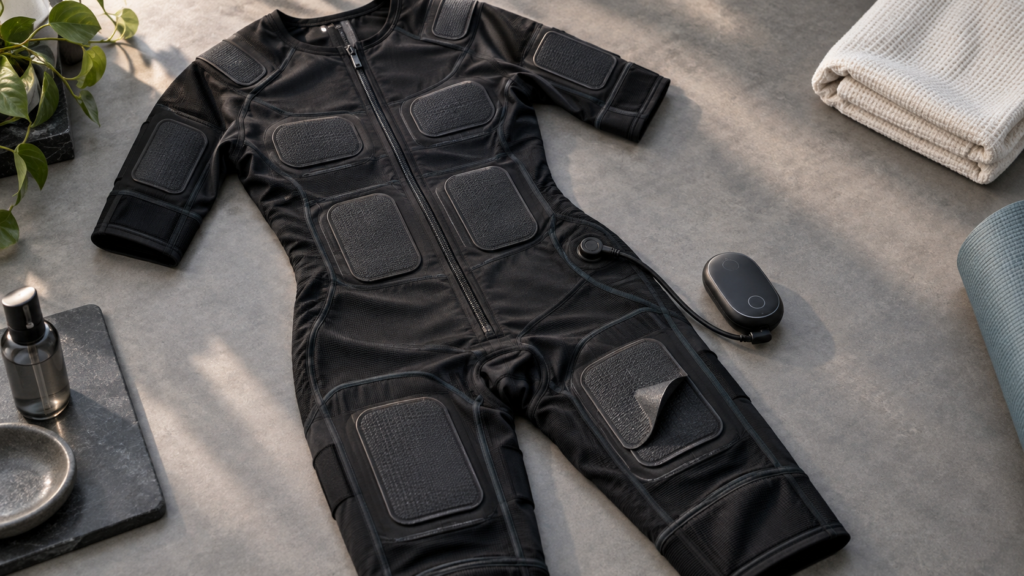
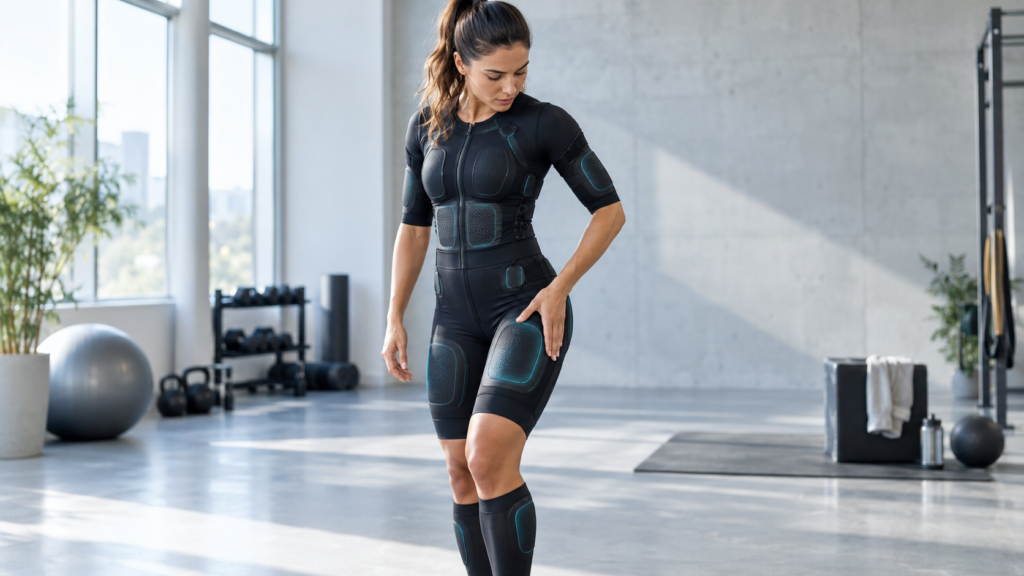
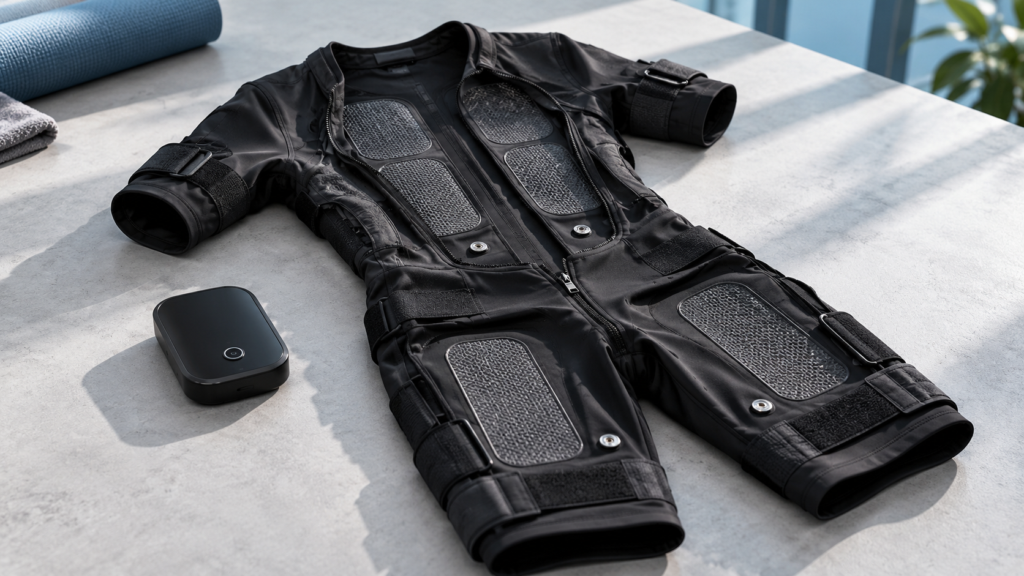
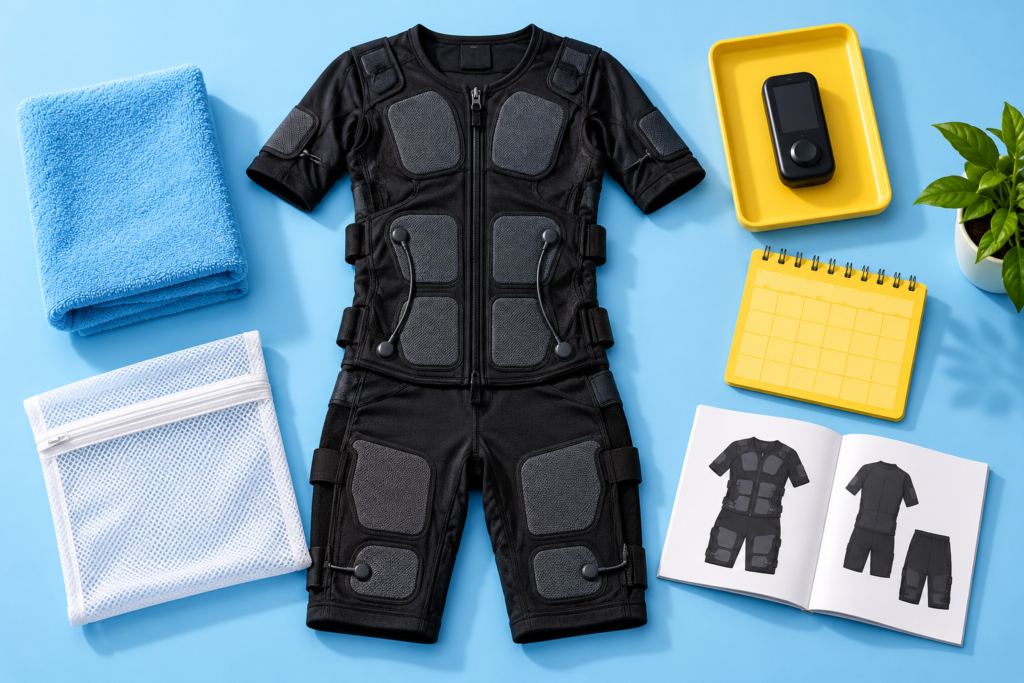
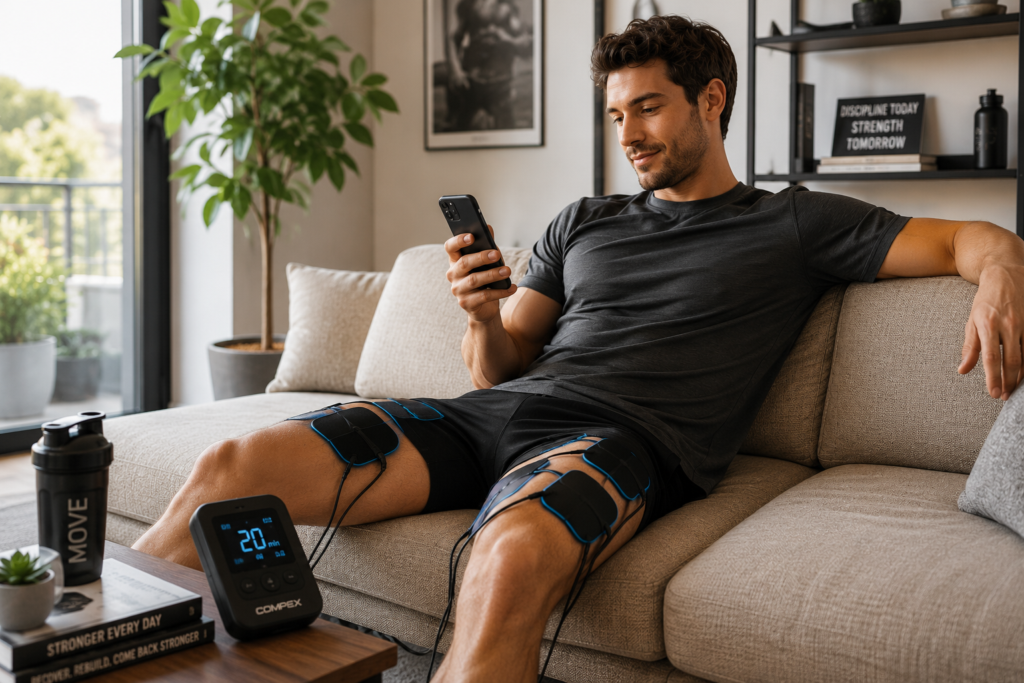
EMS uses pads placed on the skin to send controlled electrical signals that cause muscles to contract.
You can usually see or feel the contraction happening.
This isn’t a new idea that appeared because someone wanted to sell a fitness gadget. Electrical muscle stimulation has been studied in healthy adults as well as in rehabilitation and medical settings. A systematic review of EMS looked specifically at its effects on strength in healthy adults.
The reason researchers are interested in it makes sense when you think about muscle loss from inactivity.
If muscles change when they aren’t being used as much, researchers naturally want to know whether creating contractions another way can help keep them working.
That doesn’t make EMS a replacement for exercise.
But it does make it an interesting tool.
We’ll come back to what the research says about EMS in a moment. First, there’s another common question about keeping muscle that is worth clearing up.
Can You Just Eat More Protein to Keep Your Muscle?
Protein matters.
Your body needs amino acids from protein to build and maintain muscle tissue.
But eating enough protein and actually using your muscles are not the same thing.
The leg-immobilization study mentioned earlier found something interesting here too.
After two weeks of immobilization, the muscle’s protein-building response after consuming protein was about 31% lower, according to the same immobilization research.
That doesn’t mean protein suddenly stops working when you’re inactive.
It means nutrition can’t completely replace muscle use.
A simple way to think about it is this:
Protein gives your body building materials. Using your muscles gives your body a reason to use them.
You want both.
If you’re trying to reduce muscle loss from inactivity, getting enough protein matters. But eating more protein doesn’t make movement or resistance training unnecessary.
Your muscles need fuel, but they also need work.
What If You Just Took Some Time Off From the Gym?
This is where the difference between detraining and disuse becomes important.
Detraining means you stop your normal training.
Disuse can mean a much bigger reduction in muscle activity, such as bed rest or having a limb immobilized.
Those aren’t the same situation.
So yes, if you stop training long enough, you can lose some of the strength you’ve built.
But don’t use numbers from people lying in bed or wearing full-leg casts to estimate what happened to you during two weeks away from the gym.
You were probably still using your muscles every day.
That means muscle loss from inactivity can look very different for someone who stopped lifting but still lives an active life compared with someone whose leg can’t move at all.
And there’s another piece of this story that’s worth knowing if you’re worried about losing progress.
You May Get Your Strength Back Faster Than You Think
Losing some strength doesn’t mean you’re starting over.
A 2024 training study followed people through a training program with a long break in the middle.
One group trained continuously.
Another group trained for 10 weeks, stopped resistance training for 10 weeks, and then trained again for another 10 weeks.
As you would expect, the group that stopped training lost some strength and muscle size during the break.
But when they started training again, they made fast progress during the first five weeks.
By the end of the study, their overall results were similar to those of the people who had trained continuously.
That’s useful to remember if you’ve been away from training longer than you planned.
Losing some progress doesn’t mean you’ve lost everything.
Your first few workouts back may feel rough. You might have to use lighter weights. Movements may feel less natural than they did before.
Give your body some time.
It has adapted before, and it can adapt again.
Is Muscle Memory Actually Real?
You’ve probably heard someone say that it’s easier to regain muscle than it is to build it the first time.
People usually call that muscle memory.
There’s real research behind the idea, although scientists are still figuring out exactly how it works.
A recent human muscle-memory study found that some changes created by strength training remained after a period without training.
Researchers are still studying exactly what these changes mean for regaining muscle and strength.
You don’t need to think of your biceps as literally remembering your old dumbbells.
The simpler point is that your previous training can leave changes behind even after you stop training.
So if you’re dealing with muscle loss from inactivity after some time away, don’t automatically assume you’re back at day one.
You may have lost some strength.
That doesn’t erase all the work you’ve done.
So What’s the Best Way to Prevent Muscle Loss From Inactivity?
For most healthy people, the answer isn’t complicated.
Use your muscles.
Move throughout the day.
Walk.
Carry things.
Climb stairs.
And if you’re able to, do some form of resistance training.
Resistance training gives your muscles a clear reason to maintain and build strength.
It also does something important that gets lost when people compare exercise with devices like EMS.
A workout doesn’t only make a muscle contract.
You have to control the weight. You have to keep your balance. Different muscles have to work together. Your nervous system has to coordinate the movement. Your joints move through different positions.
Your heart and lungs may have to work harder too.
EMS doesn’t replace all of that.
But it does something exercise also does:
It makes muscles contract.
And that’s why researchers have spent time studying whether EMS could have a role in supporting muscle strength and addressing muscle loss from inactivity.
Does EMS Actually Make Muscles Stronger?
There is research showing that it can.
A 2023 systematic review looked at 10 studies involving a total of 174 healthy adults.
All 10 studies reported significant strength gains following EMS.
That sounds impressive, but there’s an important second part.
The researchers did not find improvements in the strength-related functional tests they examined. There was also a lot of variation in how EMS was used between studies, so they couldn’t point to one perfect treatment time, intensity, pulse, or frequency.
Here’s what that means in normal terms.
EMS can make your muscles work, and research shows those contractions can improve strength.
But improving muscle strength in a controlled test doesn’t automatically mean every physical ability improves with it.
Being able to run, jump, catch yourself when you lose your balance, lift a heavy box, or play a sport requires your whole body to work together.
A muscle contraction is part of that.
It isn’t all of it.
Is EMS as Good as Lifting Weights?
This question comes up a lot, but it’s not quite the right way to look at EMS.
Still, researchers have compared the two.
A 19-study meta-analysis compared electrically stimulated contractions with normal voluntary strength training in healthy people.
When training volume was matched, the researchers didn’t find a significant difference between the methods for strength gains.
That’s interesting.
But it doesn’t mean science has shown that sitting with EMS pads on your legs is the same as going through a complete workout.
The studies looked at specific strength outcomes under controlled conditions.
Exercise does much more.
A squat, for example, isn’t just your quadriceps contracting. Your hips, knees, ankles, core, and nervous system all have to work together. You have to balance your body and control the movement.
EMS can work the muscle.
Exercise also teaches your body to use that muscle while you move.
That’s an important difference.
For someone concerned about muscle loss from inactivity, the takeaway shouldn’t be that EMS and exercise are interchangeable. It’s that EMS provides another way to create muscle contractions.
Why Has EMS Been Studied in Hospitals?
One of the easiest ways to understand the value of EMS is to look at situations where normal exercise becomes difficult.
Imagine someone who has been hospitalized for a long time.
They can’t simply walk into a gym and start doing squats.
But we already know that major periods of inactivity can cause muscle size and strength to fall.
That’s one reason researchers have studied neuromuscular electrical stimulation, or NMES, in hospitals and rehabilitation settings. NMES is a term you’ll often see in medical research involving electrical stimulation of muscles.
A large systematic review looked at 42 papers involving 1,452 hospitalized adults.
Compared with usual care or control groups, NMES had a small effect on muscle strength and a moderate effect on muscle size. Researchers also found small improvements in walking performance and general movement.
The research wasn’t perfect. Many of the studies had a high or unclear risk of bias, so the results need to be viewed with that in mind.
The point isn’t that hospital research proves everyone needs EMS.
It helps explain why electrical stimulation is useful enough to study.
It gives researchers another way to make muscles contract when normal muscle use may be limited.
That’s especially interesting when researchers are looking at muscle loss from inactivity in people who can’t simply get up and exercise normally.
Where Does EMS Fit If You Can Exercise Normally?
If you’re healthy and able to exercise, keep exercising.
EMS shouldn’t be your reason to stop moving.
A better way to think about it is as another tool for muscle activation.
You might use EMS to create additional muscle contractions outside of your normal training. It can also be used to target certain muscle groups.
And because EMS doesn’t require you to lift an external weight to create the contraction, researchers have also been interested in it during periods when normal activity is reduced.
That doesn’t mean anyone experiencing muscle loss from inactivity should automatically reach for an EMS device.
There’s an important limit here.
If you’re less active because you’ve had surgery, broken a bone, injured a tendon or ligament, or you’re dealing with another medical problem, don’t assume it’s safe to put EMS pads on the area and start making the muscle contract.
There may be a reason your doctor or physical therapist wants an area protected.
Follow their rehabilitation plan.
What EMS Can’t Replace
The simplest way to understand EMS is to be clear about what it does.
It creates muscle contractions.
That’s useful.
But a muscle contraction isn’t everything your body gets from exercise.
EMS doesn’t automatically replace walking.
It doesn’t replace cardiovascular exercise.
It doesn’t teach you how to balance.
It doesn’t give you the same practice controlling your body through different movements.
It doesn’t automatically improve flexibility or mobility.
And it doesn’t recreate everything that happens when several muscle groups have to work together to lift, run, jump, or play a sport.
So don’t think of EMS as a way to avoid using your body or as an easy answer to muscle loss from inactivity.
Think of it as another way to give your muscles work to do.
That’s a much better reason to use it.
If You’ve Lost Strength, What Should You Do?
First, don’t assume you’ve ruined your progress.
If you simply stopped training for a while, start using your muscles again.
You probably don’t need to walk into the gym on your first day back and prove that you can still lift exactly what you lifted before.
Use a weight you can control.
Give your body time to get used to training again.
If you’ve simply become less active, look for easy ways to add movement back into your day. Walk more. Take the stairs. Carry your groceries. Get back to resistance training if you’re able.
The little things still ask your muscles to work.
If you’re concerned about muscle loss from inactivity, the goal doesn’t have to be doing the hardest workout possible. The first step is simply getting your muscles working regularly again.
If you’re interested in EMS, think of it as another option for creating muscle contractions. Research supports its ability to improve strength in certain settings, and it can be used alongside an active lifestyle rather than instead of one.
And if your strength loss comes after an injury, surgery, or illness, your situation is different from someone who simply took a few months away from the gym. That’s a good time to work with your doctor or physical therapist instead of trying to rush back on your own.
Your Muscles Need a Reason to Stay Strong
If you’ve ever returned to the gym and wondered why your old weights suddenly felt so heavy, your body wasn’t failing you.
It was adjusting.
Your body gets better at the things you regularly ask it to do.
When you ask your muscles to produce force, they have a reason to maintain that ability.
When you stop asking, especially during a major period of inactivity, strength can start to fall. And because strength depends on more than muscle size, you may feel that change before you can clearly see it.
The good news is that your body can adjust in the other direction too.
Start using your muscles again and they have a reason to get stronger again.
The best way to deal with muscle loss from inactivity is to give your muscles regular work. Resistance training is one of the best ways to do that when you’re able. Normal movement matters too.
EMS gives you another way to create muscle contractions and keep your muscles working.
It doesn’t need to replace exercise to be useful.
Your muscles are built to be used. Give them work to do, and you give your body a reason to keep them strong.
Ready to Find the Right EMS Device?
Not sure which EMS device is right for you? Check out our product and brand reviews or use our comparison tool to compare your options and find the best fit for your needs.