Quick Answer
An EMS muscle stimulator uses electrodes on the skin to produce muscle contractions. Handheld pad units generally target selected areas, while full-body suits stimulate multiple muscle groups and are often used with guided exercise. Choose by intended use, fit, electrode contact, channel control, and the safety guidance for that specific device. Research on one protocol does not establish the same results for every product, and EMS is not a spot-fat-loss treatment.
Key Takeaways
- EMS pad units and full-body suits share a basic principle but differ in coverage, preparation, and intended use.
- Pulse width, frequency, intensity, work-rest timing, and electrode contact interact; no single specification determines results.
- A device’s intensity percentage is not a standardized dose across brands.
- Research supports possible strength benefits with specific protocols; muscle-size results are less consistent.
- Check intended use, contraindications, and supervision requirements before starting.
An EMS muscle stimulator is a device that sends controlled electrical pulses through electrodes on the skin to make muscles contract. That covers a small handheld unit with sticky pads and a full-body EMS suit with built-in electrodes. Both use the same basic principle, but they are built for different jobs. This guide explains how each type works, which specs actually matter when you compare devices, what the research supports, and what the FDA says about muscle stimulators sold to consumers.
What Is an EMS Muscle Stimulator?
EMS stands for electrical muscle stimulation. In research it is often called neuromuscular electrical stimulation, or NMES. A stimulator produces short electrical pulses that activate the nerves supplying a muscle, which makes the muscle contract without you having to initiate that contraction voluntarily.
A 2012 review described the settings that shape a stimulation program: frequency, pulse width, duty cycle, intensity, ramp time, pulse pattern, program duration and frequency, and which muscle group is targeted. The authors also explained how these settings affect muscle fatigue. Every EMS device, from a pocket unit to a studio suit, delivers a particular combination of settings through electrodes.
EMS is different from TENS. Conventional TENS is designed primarily for pain management through sensory stimulation, while EMS deliberately produces muscle contractions. Some TENS methods can also produce twitches, so sensation alone does not reliably identify the mode. Many combo units offer both; check the program and manual before starting.
Handheld and Pad Units vs Full-Body EMS Suits
Handheld and Pad Units
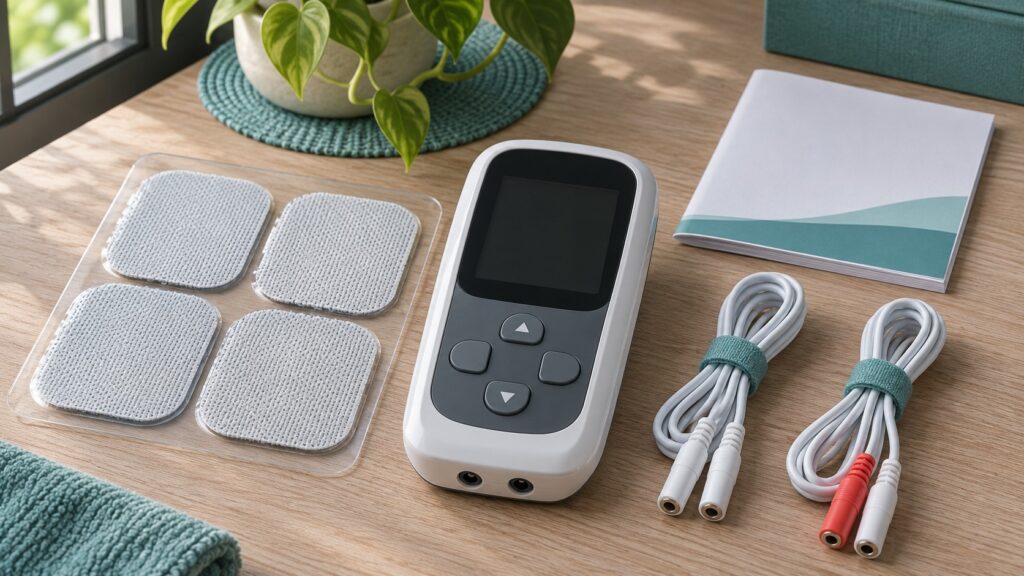
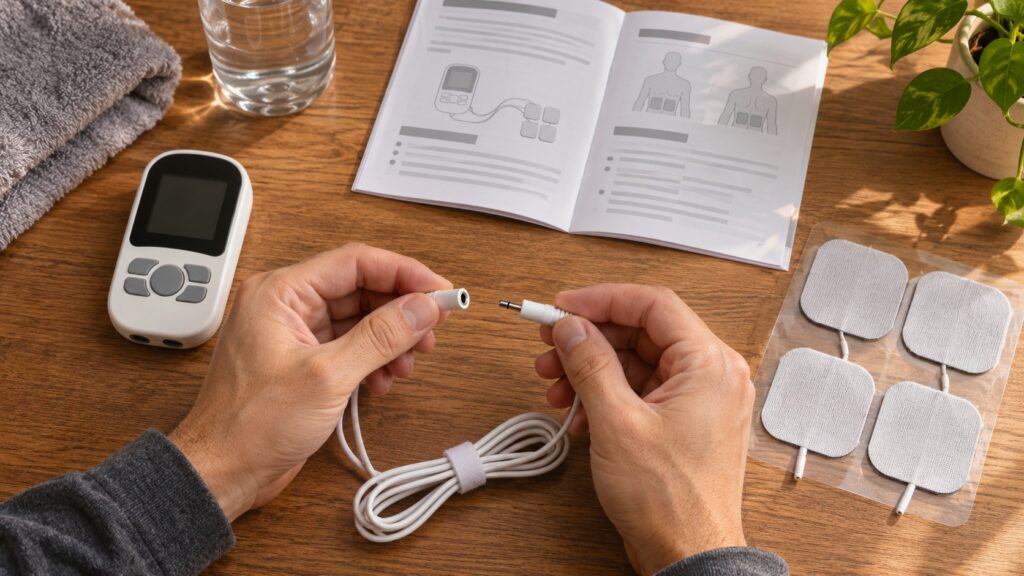
These are small controllers with lead wires and adhesive gel pads. Many consumer models have two to four channels, though designs vary. A channel commonly controls an electrode pair, and pad placement determines the area being stimulated.
- Best suited to: targeting a limited number of muscle groups or following a localized protocol prescribed by a clinician.
- Limits: smaller coverage, placement takes practice, and adhesive pads require care and eventual replacement.
A compact controller is not automatically a rehabilitation device. Check its intended use rather than assuming any device with pads is appropriate for an injury or recovery program.
Full-Body EMS Suits
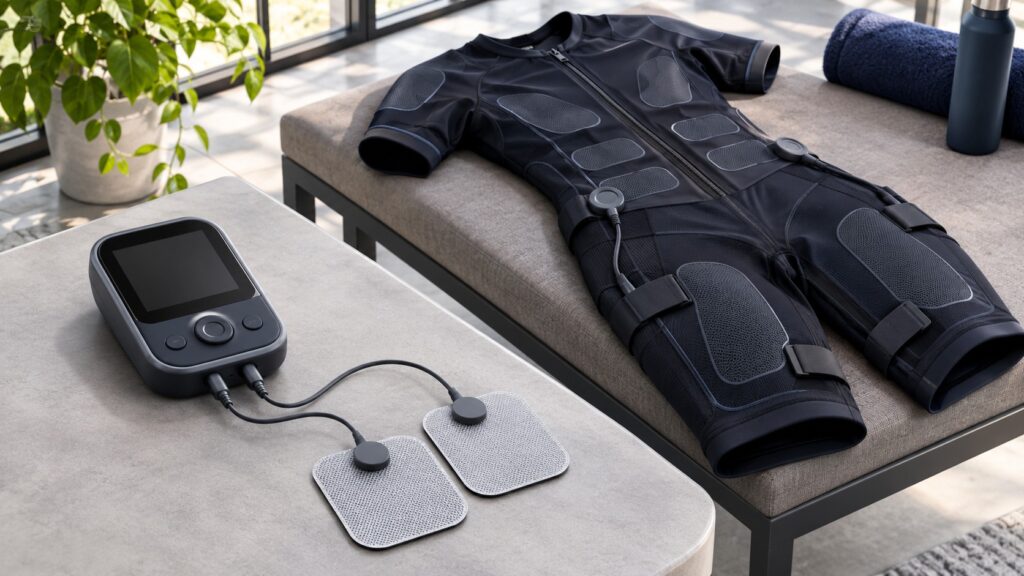
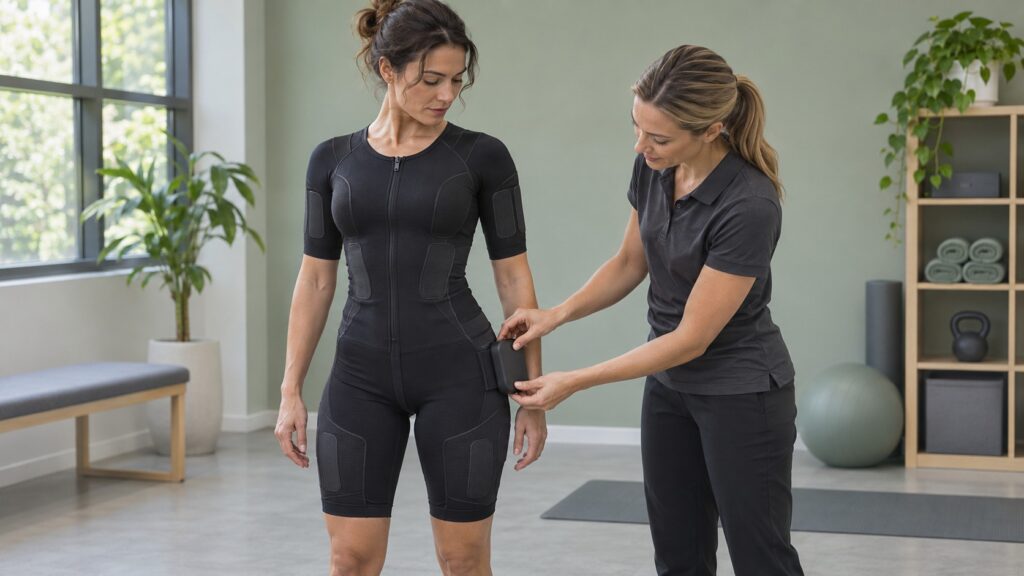
An EMS suit integrates electrodes into a garment or a combination of vest, shorts, and bands so that many muscle groups can be stimulated in one session, often during guided exercise. For a full introduction, read what is an EMS suit.
- Best suited to: multi-muscle training sessions with appropriate screening, instruction, and supervision.
- Limits: higher cost, fit and contact requirements, and the need to manage the training load across multiple muscle groups.
Some systems require dampened electrodes or a base layer. Dry-contact systems have different preparation requirements. Follow the instructions for the particular suit instead of adding water or gel because another brand requires it.
Quick Comparison
| Feature | Handheld or pad unit | Full-body EMS suit |
|---|---|---|
| Coverage | Selected areas, depending on channels and placement | Multiple muscle groups in one session |
| Electrodes | Commonly reusable adhesive gel pads | Integrated textile or other conductive electrodes |
| Typical use | Localized stimulation, with or without prescribed movement | Multi-muscle stimulation, often combined with guided exercise |
| Setup | Check pads, skin contact, and approved placement | Check fit, required contact preparation, and controller connection |
| Supervision | Follow the device instructions and clinician plan when applicable | Screening and trained supervision recommended by WB-EMS guidance |
How to Judge EMS Muscle Stimulator Specs
Spec sheets can be hard to compare because brands use different terms. Focus on how each specification affects the treatment you can actually deliver.
Pulse Width and Frequency
Pulse width is how long each pulse lasts, usually in microseconds. Frequency is how many pulses occur per second, measured in hertz. Along with amplitude and timing, these settings influence contraction and fatigue. Our guide to EMS pulse width explains why you should not compare the numbers in isolation.
Channels and Independent Control
A channel is an output controlling a specified electrode pair or treatment zone, depending on the system. More electrodes do not necessarily mean more independently adjustable channels. Check whether you can set intensity separately for the areas you want to train. See independent EMS channels.
Output Type and Electrodes
Some devices regulate current and others regulate voltage, which changes how they respond within their operating limits as contact resistance changes. Electrode size and effective contact area also affect current density and comfort. Read constant current vs constant voltage and electrode size for more detail.
Intensity Percentages
A setting of 60% on one device is not the same as 60% on another. Use the manufacturer’s instructions, appropriate professional guidance, and your response to the session. Do not chase a percentage or tolerate pain to match someone else’s settings.
Instructions and Replacement Parts
Before buying, check whether the manual explains placement, contraindications, beginner progression, and electrode care. Look at the cost and availability of replacement pads or suit components. A device is easier to use consistently when the practical details are clear before it arrives.
What Does the Research Support?
An EMS muscle stimulator should be judged by the outcome studied, not simply whether it produces a strong sensation.
A 2023 systematic review analyzed 24 randomized controlled studies of NMES superimposed on voluntary contractions. Overall, findings supported possible strength improvements compared with voluntary training alone, while muscle-mass results were mixed and varied with the protocols.
This supports investigating EMS alongside exercise. It does not prove that every suit outperforms every pad unit, that movement is appropriate for every clinical application, or that any consumer device reproduces the research conditions.
For training, the exercise, progression, and recovery plan still matter. EMS also should not be presented as a way to selectively remove fat from the area beneath an electrode. For a balanced view, see EMS training limitations.
What the FDA Says About Muscle Stimulators
The FDA’s consumer guidance explains that muscle stimulators must meet applicable U.S. premarket requirements. It distinguishes professional rehabilitation uses from devices intended for consumers.
The page states that muscle stimulation may temporarily strengthen, tone, or firm a muscle, but that EMS devices have not been cleared for weight loss, girth reduction, or obtaining “rock hard” abs. It also describes reports of injuries and interference with implanted electronic devices.
When shopping, ask for the exact model and its authorized intended use. Registration or listing alone is not the same as evidence supporting every advertised benefit. A device’s regulatory status needs to match the particular use being promoted.
Safety Checklist Before You Use Any Stimulator
- Read the full manual and follow the stated electrode placement and session limits.
- Check contraindications before starting. People with implanted electronic devices, including pacemakers and defibrillators, should not self-start stimulation; specialist advice does not override a device’s contraindication.
- Do not improvise placement over the front of the neck, broken skin, or a current path across the chest. Use only the device’s specified electrode configuration.
- Start conservatively under the appropriate beginner guidance and increase gradually. Existing fitness does not make you an experienced EMS user.
- Inspect pads, connectors, leads, and garment contact areas before use.
- Stop and seek prompt medical care for severe muscle pain, marked swelling, unusual weakness, or dark urine after a session.
For whole-body suits, the 2023 international guideline emphasizes qualified trainers, close supervision, contraindication screening, careful preparation of beginners, and recovery between sessions. It addresses commercial non-medical WB-EMS, rather than supplying one protocol for every stimulator.
Review our EMS suit contraindications and EMS safety guide before your first session.
Which Type Should You Choose?
- Choose a handheld or pad unit if your goal is localized stimulation and the device is intended for that use, particularly when following a clinician’s plan.
- Consider a full-body suit if your goal is guided multi-muscle training and you can commit to the fitting, screening, instruction, and supervision it requires.
Start with the job you need the device to do. More channels and a higher output do not make an unsuitable device a better choice.
Frequently Asked Questions
Do EMS muscle stimulators build muscle?
Some research supports strength improvements, including when stimulation accompanies voluntary exercise. Evidence for muscle size changes is more mixed and depends on the protocol, population, and equipment.
Can an EMS muscle stimulator help me lose belly fat?
It is not a spot-reduction tool. The FDA’s consumer guidance does not support EMS clearance claims for weight loss or girth reduction.
Who should not use EMS?
Contraindications vary by device and setting. Implanted electronic devices, pregnancy, and certain cardiovascular or neurological conditions require particular attention. Read the full contraindications and obtain appropriate medical advice before considering use.
Does a dry suit mean electrode contact does not matter?
No. Fit and contact still matter. “Dry” describes a system’s intended preparation, not permission to ignore poor contact or use unsupported products on the electrodes.
Sources
- Doucet BM, Lam A, Griffin L. Neuromuscular electrical stimulation for skeletal muscle function. Yale J Biol Med. 2012. Read the review.
- Borzuola R, et al. Superimposing neuromuscular electrical stimulation onto voluntary contractions to improve muscle strength and mass: A systematic review. Eur J Sport Sci. 2023. Read the review.
- Kemmler W, et al. Position statement and updated international guideline for safe and effective whole-body electromyostimulation training. Front Physiol. 2023. Read the guideline.
- U.S. Food and Drug Administration. Electronic Muscle Stimulators. Read the guidance.
This article is for general education and is not medical advice. Talk to your healthcare professional before using an EMS device if you have a health condition.