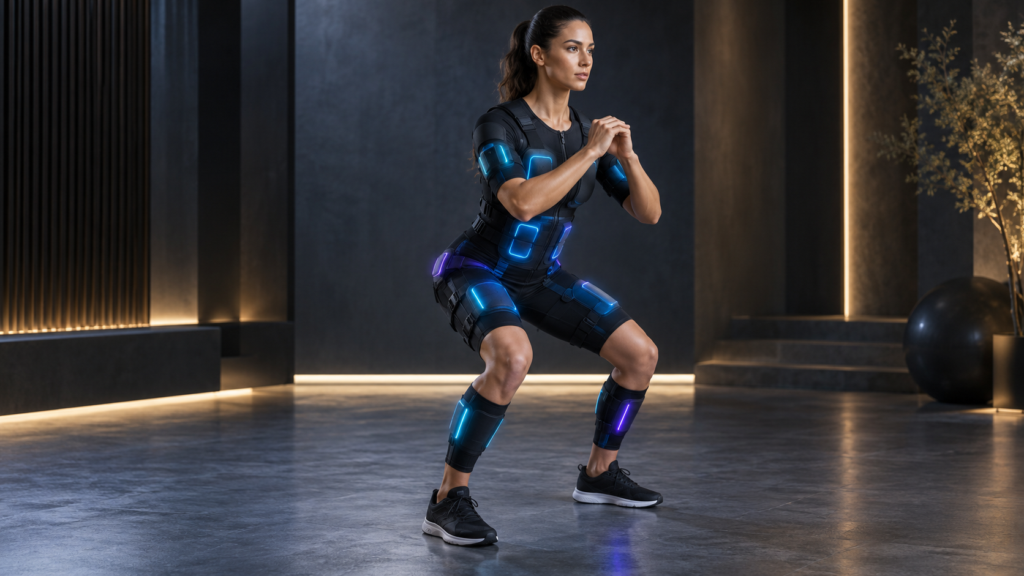
Whole-body EMS systems place electrodes over muscle groups with very different sizes, sensitivities, and contact conditions. Independent channels or zones allow output to be adjusted for those differences instead of forcing one identical setting across the garment.
“Independent” can refer to amplitude, timing, or both. Buyers and users should verify what a system actually controls rather than assuming every advertised zone is a fully separate electrical channel.
What is an EMS channel?
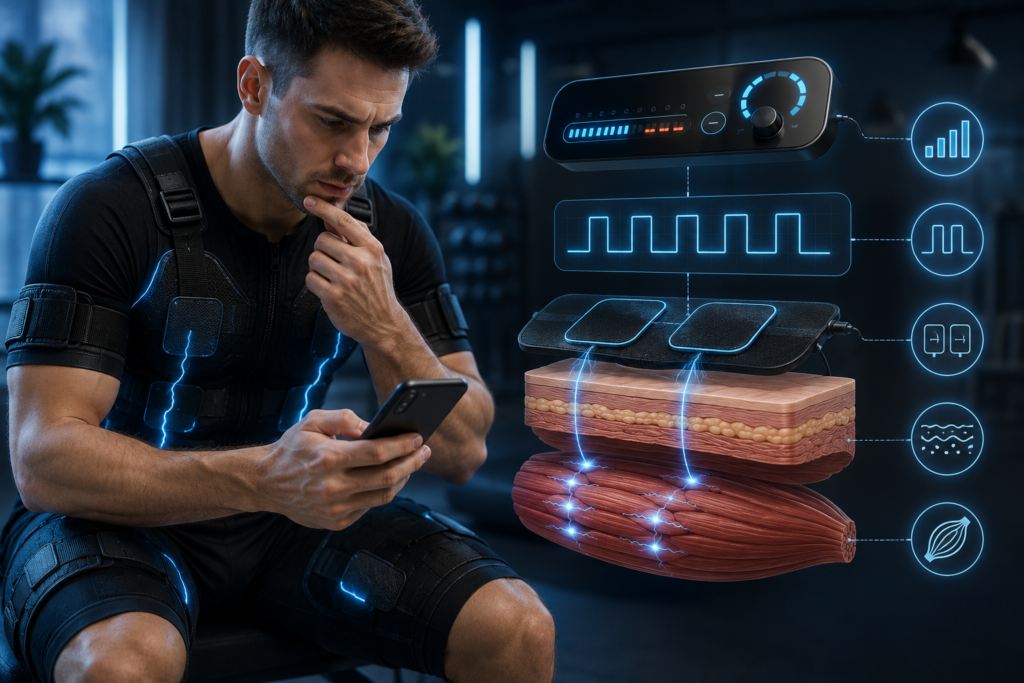
An EMS channel is an electrical output path that delivers pulses through an electrode circuit. Traditional portable NMES units often have one or two electrode-pair channels. A suit may route more channels through a garment connector and present them as named zones such as quadriceps, glutes, abdomen, back, chest, or arms.
The app’s zone count does not necessarily reveal the hardware channel count. Several electrodes can be grouped under one slider, and left and right sides may share a control. Consult the technical manual for the exact architecture.
What can independent control mean?
There are three common possibilities:
- Independent amplitude: each zone can use a different output level.
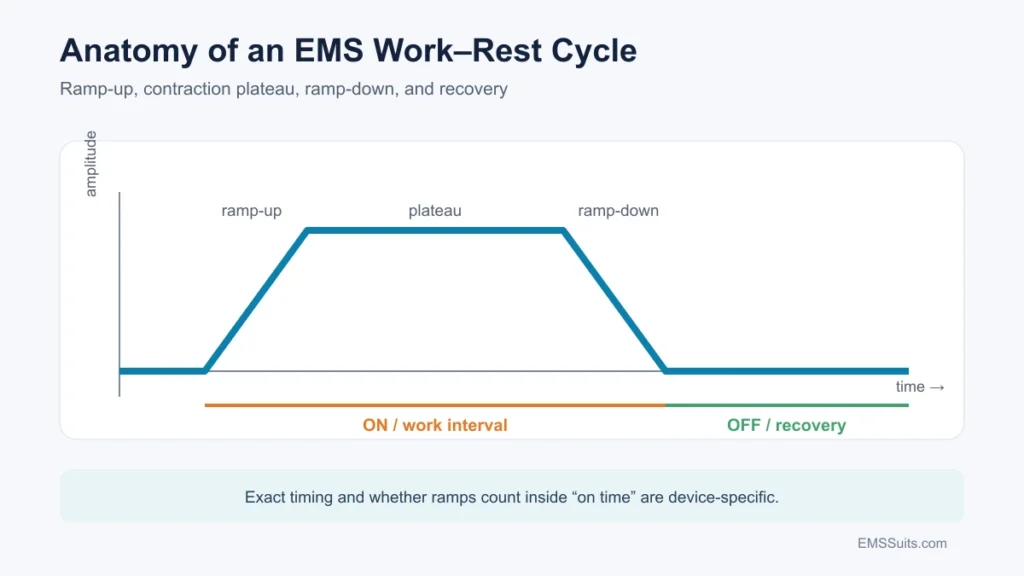
- Independent timing: zones can start, stop, alternate, or follow different contraction cycles.
- Independent program parameters: a professional system may allow different frequencies, pulse widths, or modes by channel.
Many fitness suits provide the first capability while keeping timing and waveform synchronized. That is still useful, but it should not be described as if every parameter were independently programmable.

Why identical zone numbers are rarely necessary
The same displayed level can feel different on the thighs and abdomen because electrode area, tissue depth, nerve location, garment pressure, and individual sensitivity differ. A user may also have more even contact in one region than another.
Zone control allows the operator to seek a clear but tolerable response in each area. The goal is not to make every slider numerically equal. It is to maintain even contact, controlled movement, and an appropriate overall training demand.
Left-right control and asymmetry
Some systems group both sides of a muscle region under one control. Others allow left and right adjustment. Separate controls can be helpful when garment contact or sensation differs, but they are not a diagnostic tool for muscle imbalance.
A large and repeatable difference in sensation may reflect electrode alignment, garment twisting, moisture, connectors, previous injury, or individual anatomy. Stop and correct the setup before increasing only the weaker-feeling side. Persistent unexplained differences warrant advice from a qualified professional and the manufacturer.
Zone control does not guarantee selective muscle recruitment
Surface stimulation activates excitable nerves beneath and around an electrode. Current does not remain inside a perfect anatomical rectangle. Electrode size, placement, amplitude, and anatomy influence which motor axons are reached.
A slider labeled “glutes” indicates the intended garment zone, not proof that only one muscle is active. Users may feel nearby muscles co-contract, especially as amplitude rises.

Independent output and channel synchronization
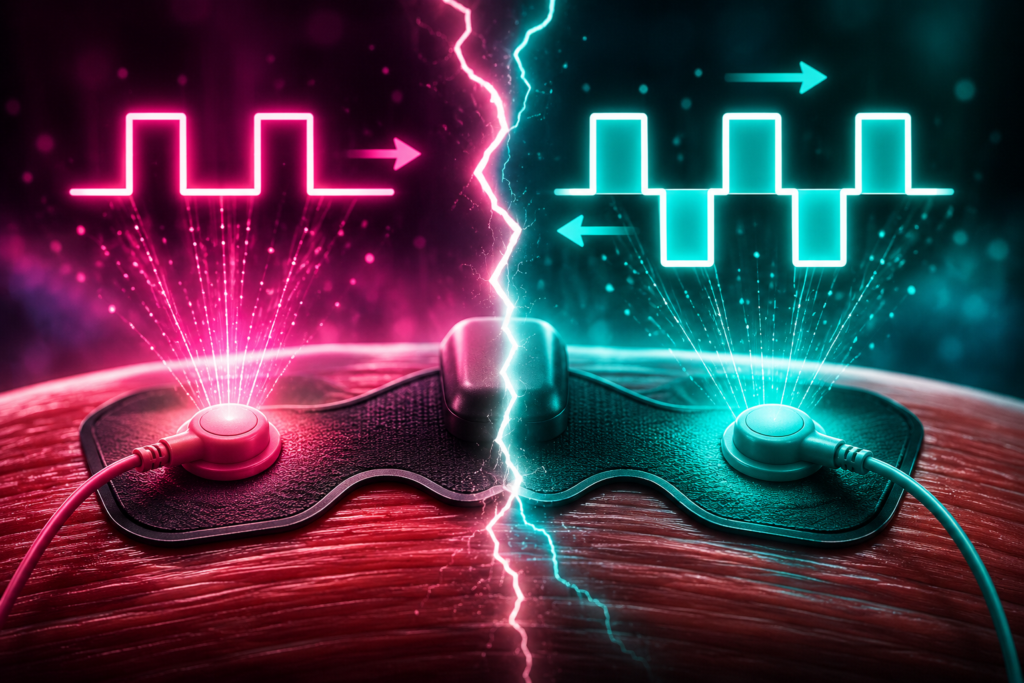
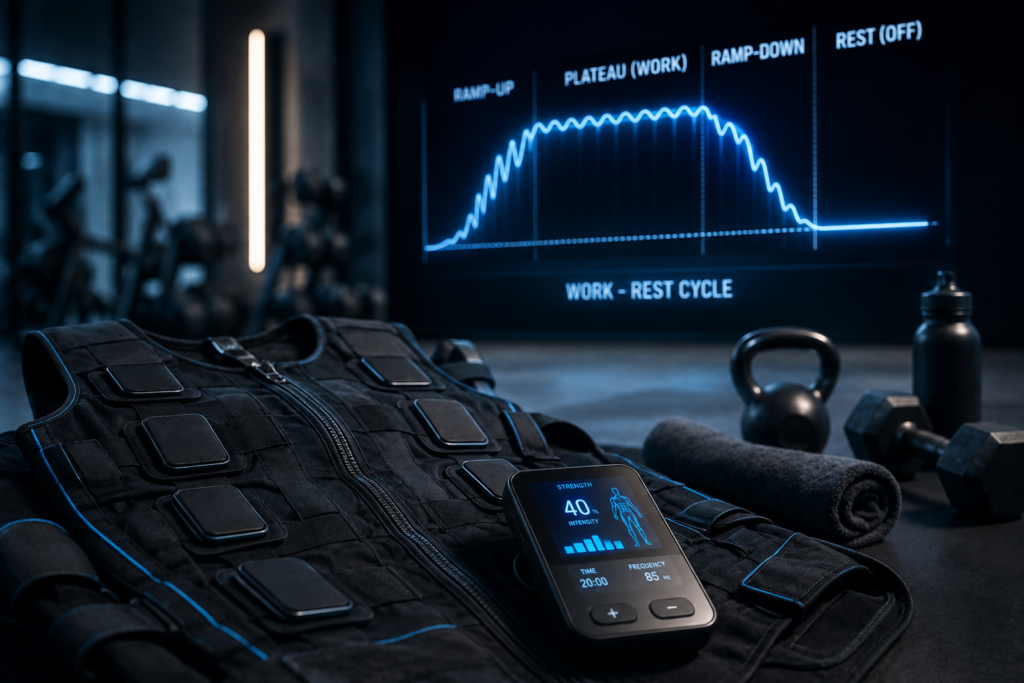
Intensity and timing are separate. Multiple zones can have different amplitudes while entering their work and rest phases together. Our guide to EMS channel synchronization explains synchronous, reciprocal, and sequenced timing.
When comparing devices, ask:
- Are left and right sides separate?
- Can a zone be turned completely off?
- Are levels saved to a user profile?
- Does the system limit rapid increases?
- What happens after an app or wireless disconnect?
- Can timing differ between zones or only amplitude?
How to adjust zones conservatively
Follow the manufacturer’s sequence. A practical setup usually involves establishing electrode contact first, selecting the correct program, and increasing active zones gradually while stimulation is on.
Avoid rapidly cycling through every slider. Change one zone at a time so an unpleasant sensation can be traced to the correct electrode area. Keep movements simple while setting levels, then reassess after changing posture.
The displayed numbers are device-specific. As explained in EMS amplitude vs intensity, two brands’ percentages are not equivalent electrical or physiological doses.
What if one zone cannot be felt?
Do not immediately push it to the maximum. Check:
- Whether that zone is enabled in the program.
- Garment orientation and electrode alignment.
- Required moisture or skin preparation.
- Wrinkles, gaps, and strap tension.
- Cable, snap, or controller connection.
- Whether the manufacturer provides a contact-test function.
If contact is correct but the zone remains inactive, stop using that channel and contact support. Do not improvise wiring or place unapproved conductive material under an electrode.

Frequently asked questions
Are more EMS channels always better?
No. More controls can improve adjustability, but electrode design, program quality, safeguards, reliability, and usability also matter.
Should all zones be set to the same percentage?
No. Muscle regions and contact conditions differ. Use device instructions and a tolerable response rather than numerical symmetry.
Can independent channels correct a muscle imbalance?
They can deliver different settings, but a perceived imbalance requires proper assessment. A channel control is not a diagnostic or treatment plan.
Can one zone be disabled?
Many systems allow it, but not all. Confirm in the manual, especially when a program or health-screening decision requires a region to remain unstimulated.
The practical takeaway
Independent EMS channels can make a multi-zone session easier to individualize, but the word “independent” needs clarification. It may mean separate amplitude, separate timing, or complete parameter control.
Use zone controls to account for fit and sensitivity, not to chase matching numbers. Diagnose weak or sharp zones by checking contact first, and compare products by documented control capabilities rather than the number of sliders in an app screenshot.