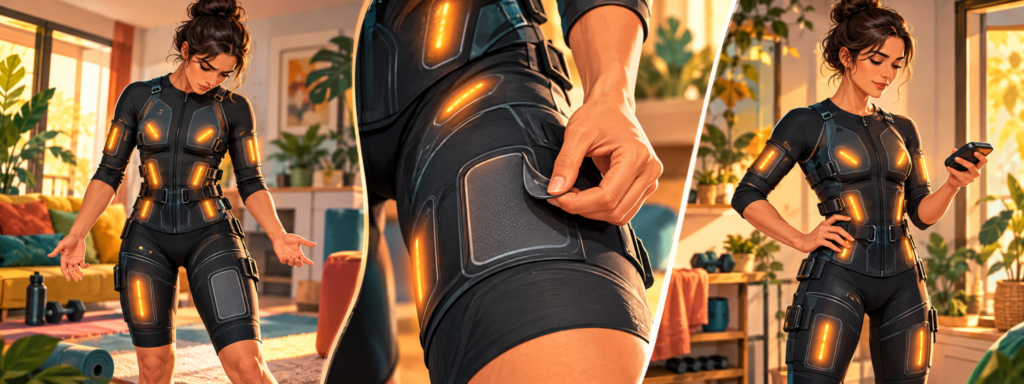
An EMS suit rarely feels identical across every muscle zone. The glutes, abdomen, back, arms, and thighs differ in size, nerve location, tissue depth, electrode area, and garment pressure. Some variation is expected.
A sudden, painful, or extreme difference is different. It can indicate poor contact, a disabled zone, a connector problem, garment wear, or a setting that no longer matches the user’s position. Stop stimulation and troubleshoot before increasing the weaker-feeling area.
Decide what “uneven” means
The word can describe several patterns:
- Left side feels stronger than right.
- One muscle zone feels absent.
- One electrode edge feels sharp.
- The same zone changes during movement.
- Stimulation begins evenly but fades in one area.
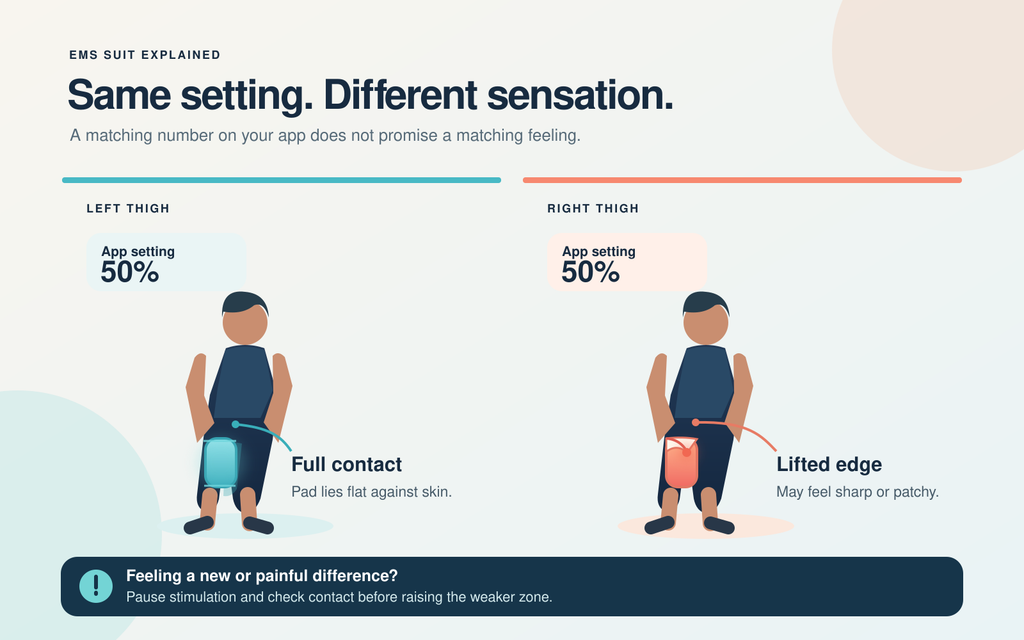
- The app shows matching numbers but sensation differs.
Write down the pattern. Different causes produce different next steps.
Matching numbers do not guarantee matching sensation
A device percentage is specific to that controller and zone. Even when two sides display the same level, the current pathway and sensory response can differ.
As explained in EMS amplitude vs intensity, a displayed percentage is not a direct measure of muscle activation. Electrode geometry, anatomy, pulse parameters, and contact affect what the user feels.
Do not force every zone to the same number. Adjust within the manufacturer’s process while prioritizing comfort, controlled contraction, and safe movement.
Check program and zone state
Before changing the garment, confirm:
- The correct program is running.
- The missing zone is enabled.
- Left and right controls are not intentionally different.
- A recovery or alternating mode is not sequencing zones.
- The session is not paused.
- The selected profile matches the suit.
An alternating program may be working correctly even though regions do not contract simultaneously. The guide to EMS channel synchronization explains timing patterns.
Check complete electrode contact
Pause output and inspect the affected area for wrinkles, lifted edges, dryness, lotion, a loose strap, or a twisted garment. If a wet-electrode system is used, dampen only as the manual instructs. Do not add moisture to a dry system without approval.
A sharp spot inside a weak zone can mean only part of the conductive area is carrying current. Follow the full patchy EMS electrode contact checklist before restarting.
Recheck body position
Joint angle and muscle length can change the force and sensation produced by stimulation. Research on quadriceps and hamstrings has shown that electrode location, joint angle, and waveform can affect electrically produced joint moments.
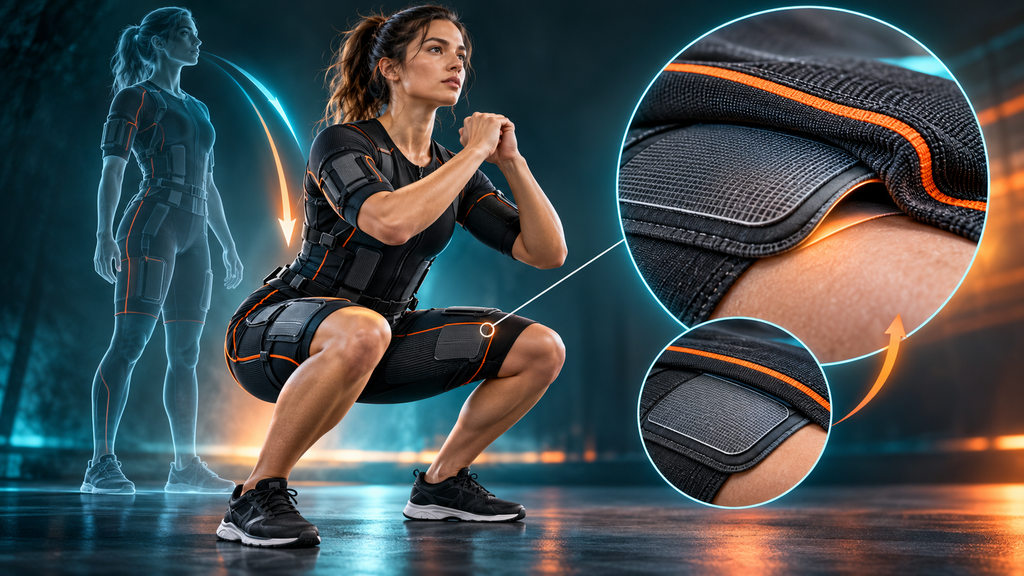
In a suit, posture can also change garment tension. A torso rotation may lift one abdominal panel, while a deep squat may move a thigh electrode relative to the muscle.
Return to the neutral setup position. If the zone becomes even, reintroduce movement slowly. A repeatable dropout at one joint angle may indicate fit or equipment wear and should be reported to support.
Consider fatigue and recent training
A muscle’s response can fade during repeated contractions. NMES-induced fatigue is influenced by frequency, amplitude, duty cycle, muscle group, and voluntary effort.
Do not keep increasing intensity to maintain the first repetition’s sensation. If contraction quality falls across the whole zone as a set continues, end the set or session according to the program rather than chasing output.
Recent soreness, injury, swelling, or altered sensation also changes the situation. Do not use a zone to “test” an injured or numb area without appropriate medical guidance.
Isolate settings from hardware
If the manual provides a safe contact or channel test, follow it at low output. Do not invent a test that places hands across garment electrodes or swaps unapproved parts.
Useful observations include:
- Does the fault remain with the same garment zone?
- Does it appear only with one controller?
- Does it occur only while moving?
- Does the app report an open circuit or error?
- Is the connector visibly loose?
Stop when a test identifies a likely component. Continued fault reproduction under stimulation adds risk without improving the diagnosis.
When individual anatomy may explain the difference
Surface electrodes activate nerves through skin and underlying tissue. People differ in subcutaneous tissue thickness, nerve location, muscle geometry, and sensitivity. The same garment may therefore require different zone settings across users.
Anatomical variation is a possible explanation only after correct fit and equipment function are established. It should not be used to dismiss a new or painful asymmetry.
When to stop using the affected zone
Discontinue the zone and contact support or a qualified professional if:
- Pain is sharp, burning, or persists after output stops.
- Skin is damaged or significantly irritated.
- Sensation is absent because of numbness.
- The zone activates unpredictably.
- A connector, cable, or textile electrode is damaged.
- The difference appeared suddenly without a setup change.
- Repositioning and approved contact preparation do not help.
Frequently asked questions
Should the left and right sides use the same level?
Not necessarily. Fit and sensitivity differ, but a large or sudden asymmetry should be checked before levels are separated further.
Why does one zone feel stronger after I change position?
Movement can alter muscle length, electrode pressure, and garment contact. Return to a neutral stance and inspect fit.
Can muscle imbalance cause uneven EMS sensation?
It may influence response, but sensation alone cannot diagnose an imbalance. Rule out settings, contact, and equipment first.
Should I raise the weak side until it matches?
Only after confirming full contact and following the device’s adjustment method. Stop if the sensation becomes sharp or the zone remains nonresponsive.
The practical takeaway
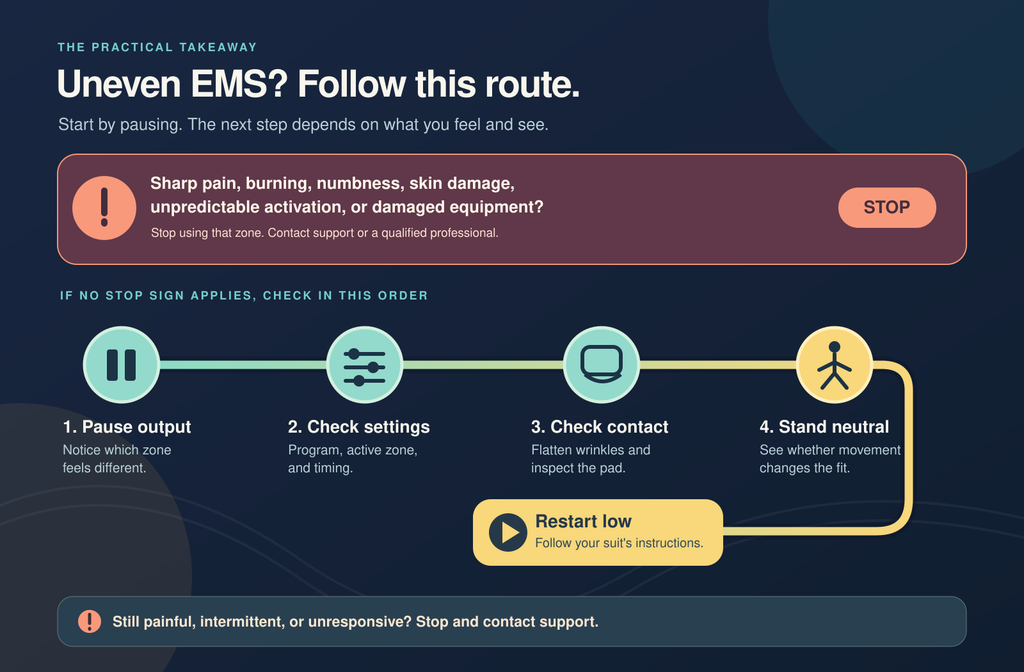
Uneven EMS can come from normal anatomical variation, independent zone settings, body position, fatigue, incomplete contact, or hardware faults. Identify the pattern before acting.
Start with program state, fit, and contact. Restart low, change one zone at a time, and stop using any channel that is painful, intermittent, or unresponsive after approved checks.