Quick Answer
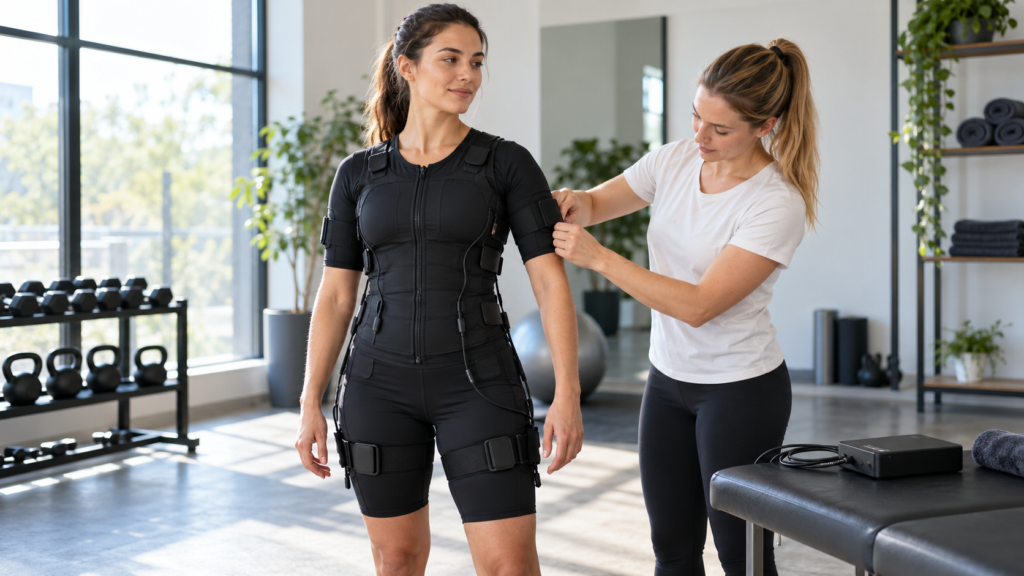
An EMS suit should hold its electrodes flat against the intended contact areas without hard folds, obvious gaps, twisting, or painful compression. Check fit with stimulation off, then move through the positions planned for your session. Correct shifting or lifting before starting stimulation, and follow your suit’s specific sizing and contact instructions.
Key Takeaway
Good EMS suit fit comes from correct sizing, electrode alignment, and stable contact during movement. More compression or higher intensity cannot reliably fix a suit that is twisted, worn out, or the wrong size. If a zone feels sharp, painful, or inconsistent, stop stimulation and check the setup.
An EMS suit should feel snug enough to keep its electrodes in place while still letting you breathe and move comfortably. If you are pulling every strap as tight as possible just to feel contact, it is worth checking the setup before starting your workout.
What proper EMS suit fit should achieve
The electrodes are the conductive panels that deliver stimulation. They need to sit where the manufacturer intends and maintain contact with the approved interface, whether that is skin or a specific undergarment.
A well-fitted suit should:
- Keep electrodes aligned with the intended body regions.
- Maintain broad contact while standing and moving.
- Avoid hard folds through conductive panels.
- Allow comfortable breathing and controlled movement.
- Keep the controller attachment secure.
- Stay in place without painful strap pressure.
The international WB-EMS guideline specifically recommends checking electrode location and suit adjustment before training. It also recommends qualified, in-person supervision for whole-body EMS. This checklist covers garment setup and does not replace those broader training precautions.
Smooth wrinkles across the electrodes
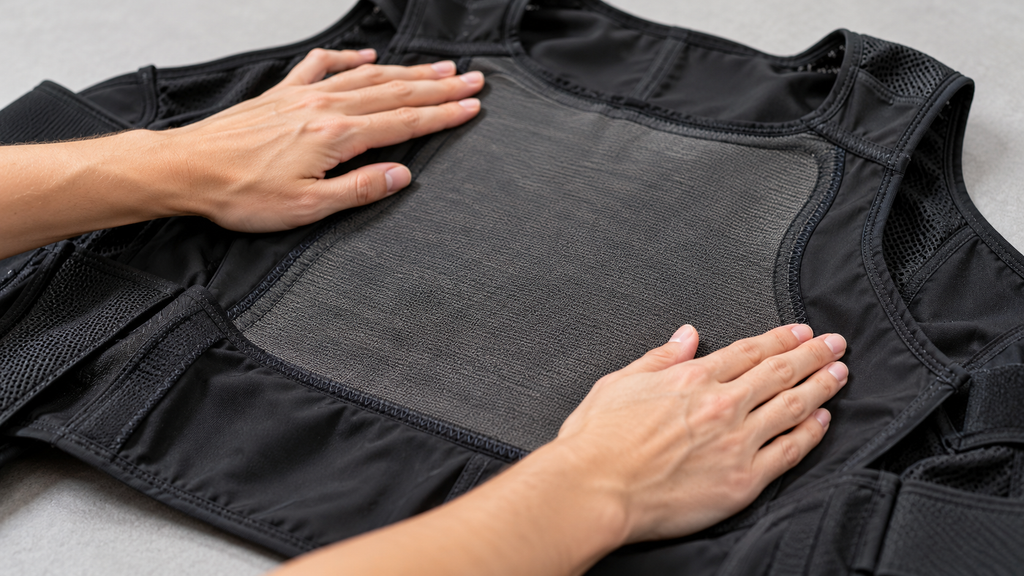
Start your EMS suit fit check by looking for fabric bunched across a conductive panel. A wrinkle can lift part of the electrode away from its intended contact surface or leave pressure concentrated along a fold.
With stimulation off, gently smooth the garment and reposition it according to the instructions. Do not tuck excess material underneath an electrode.
If the same wrinkle returns as soon as you move, check whether the garment is twisted or positioned incorrectly. Persistent bunching may also mean the size or cut does not suit your body proportions.
Research on textile-electrode comfort shows that the electrode interface can affect sensation. That study tested particular electrodes, not every commercial EMS suit, so it does not establish one universal fit or moisture method.
Check for gaps around body contours
A panel may look correctly positioned in a mirror while lifting away from the body along a curve. Inspect areas such as the lower back, abdomen, chest, and upper thigh using the manufacturer’s placement guidance.
Close fasteners in the specified order and use only the designed adjustment range. Do not add tape, elastic bands, weights, or extra compression to force a panel into place.
If correct fastening still leaves a gap, ask the manufacturer to review the fit. Tightening an unrelated strap may pull another electrode out of position.
Correct twisting and electrode misalignment
A snug garment can still be rotated. Before tightening anything further, check its seams, zipper, waistband, sleeves, and any alignment marks.
Compare electrode positions with the manufacturer’s diagram. A sleeve that has turned around the arm or a shifted waistband can change where a panel sits even when the suit feels tight.
Correct EMS suit fit before starting stimulation. If a panel does not sit where the instructions show, reposition the garment rather than increasing that zone’s intensity to compensate.
Balance strap tension without over-tightening
If your suit has adjustment straps, they should secure the garment within its intended range. Follow the product’s fastening sequence instead of repeatedly tightening whichever area feels loose.
One overly tight strap can pull a panel sideways or create uncomfortable pressure. Stop and loosen the equipment if you notice numbness, unusual skin color, painful compression, restricted breathing, or throbbing.
A useful EMS suit fit check is whether the garment stays positioned while you take a comfortable breath and move normally. You should not need to tolerate pain to keep an electrode in place.
Test fit during basic movements
Standing still only tells you part of the story. With stimulation off, try the movements planned for the session within your comfortable range.
Depending on the workout, these may include:
- A shallow bodyweight squat.
- A controlled hip hinge.
- A split stance.
- An arm raise.
- Gentle torso rotation.
Watch for lifting electrodes, shifting seams, pulling connectors, or a moving controller attachment. Do not force a deeper movement just to test the garment.
If EMS suit fit changes during a squat, pause and adjust before proceeding. Repeated contact loss in the same position may need a sizing review or an equipment inspection.
Follow the correct base-layer instructions
EMS systems do not all use the same contact method. Some require an approved conductive undergarment, while others are designed for direct skin contact.
For example, TitanBody’s guide specifies direct skin contact without clothing underneath. That instruction applies to TitanBody and should not be transferred to another system.
Follow your own model’s instructions for clothing, skin preparation, and moisture. Ordinary clothing is not automatically a substitute for a required conductive layer. Likewise, do not add water or gel simply because another suit uses it.
Recognize a suit that is too large or too small
EMS suit fit depends on more than whether you can close the zipper. Look at electrode position, movement, and how much adjustment the garment needs.
| Possible sizing problem | Signs to check |
|---|---|
| Too large | Persistent bunching, gaps after correct fastening, shifting panels, or straps reaching their limit without securing contact |
| Too small | Forced closure, uncomfortable compression, restricted breathing or movement, strained seams, or panels pulled out of position |
| Wrong proportions | Some regions fit well while others remain loose, distorted, or misaligned despite correct setup |
These signs are reasons to review sizing, not a diagnosis from appearance alone.
Use current measurements and the manufacturer’s sizing process. TitanBody’s sizing instructions specifically advise against intentionally sizing down because the fit already accounts for compression.
Do not try to correct EMS suit fit by washing the garment hotter to shrink it. Follow the care instructions and ask support about a different size.

Consider whether the garment has worn out
If the suit fitted correctly before but now bags or shifts, the problem may be wear rather than your fastening technique.
Check for stretched straps, fabric that no longer returns to shape, damaged panels, and loose attachment points. Changes in your measurements can also affect fit, so compare both the garment and your current sizing information.
The EMS suit lifespan guide explains signs that fabric, electrodes, or connectors may need attention. Avoid sewing through conductive panels or attempting an improvised repair.
Confirm contact before a full session
Once EMS suit fit is corrected, follow the manufacturer’s startup procedure and any trainer guidance. Begin at the prescribed low setting and increase gradually only as instructed.
If the system allows individual zone adjustment, assess each area separately. Sensation does not have to be identical everywhere, but a sharp point, painful edge, sudden dropout, or unexpected error calls for stopping and checking.
Return stimulation to zero or switch it off before repositioning the garment. Use the electrode contact checklist to work through other possible causes, including preparation, connections, and wear.
Do not repeatedly restart a painful or faulty zone. Contact the manufacturer if correct setup does not resolve the issue.

Frequently asked questions
Should an EMS suit have any wrinkles?
Minor fabric movement outside conductive areas may occur. Focus your EMS suit fit check on whether the electrode panels remain positioned with broad contact and no hard folds.
Can straps fix a suit that is too large?
Only within the garment’s designed adjustment range. Straps may help fine-tune fit, but they cannot reliably correct a substantial size or electrode-position mismatch.
Why does stimulation change when I squat?
Movement may change electrode contact or pull on a connection. Stop stimulation before checking the garment. If the issue continues after adjustment, ask the manufacturer to inspect the setup.
Can I wear compression clothing over the suit?
Only if the manufacturer permits it. Additional clothing can change how the garment moves and may interfere with controller access. It should not be used to compensate for poor EMS suit fit.
Should I increase intensity when one area feels weak?
Check setup first. Weak sensation can have several causes, and higher intensity does not correct a lifted or misaligned electrode. Follow the product’s troubleshooting instructions before changing settings.
Get help with a fit that keeps shifting
If you cannot maintain stable contact within the suit’s designed adjustments, send the manufacturer your current measurements and a description of where the garment lifts or shifts.
For help deciding what to check next, review the electrode contact checklist before your next session. Correct EMS suit fit should be established before you raise the output.