Quick Answer
Why Can EMS Stimulation Feel Different After You Start Sweating?
Sweat changes the contact between your skin and the suit’s electrodes. That moisture can help electricity pass more easily, making stimulation feel stronger at the same setting. Uneven moisture or electrode contact can also create sharper sensations in certain spots. If stimulation becomes painful, pause and check the fit before adjusting intensity. Follow your suit’s instructions for managing moisture.
Key Takeaways
- Sweat can change how EMS feels. Moisture can reduce electrical resistance where an electrode meets your skin.
- Even contact matters. Uneven moisture, wrinkles, or shifting electrodes can create localized discomfort.
- Wet and dry suits need different preparation. Only add water, spray, or gel if your manufacturer instructs you to.
- Increase intensity gradually. Sensation may change as you warm up and start sweating.
- More sweat does not mean better results. Neither sweat nor a higher displayed intensity proves a more effective workout.
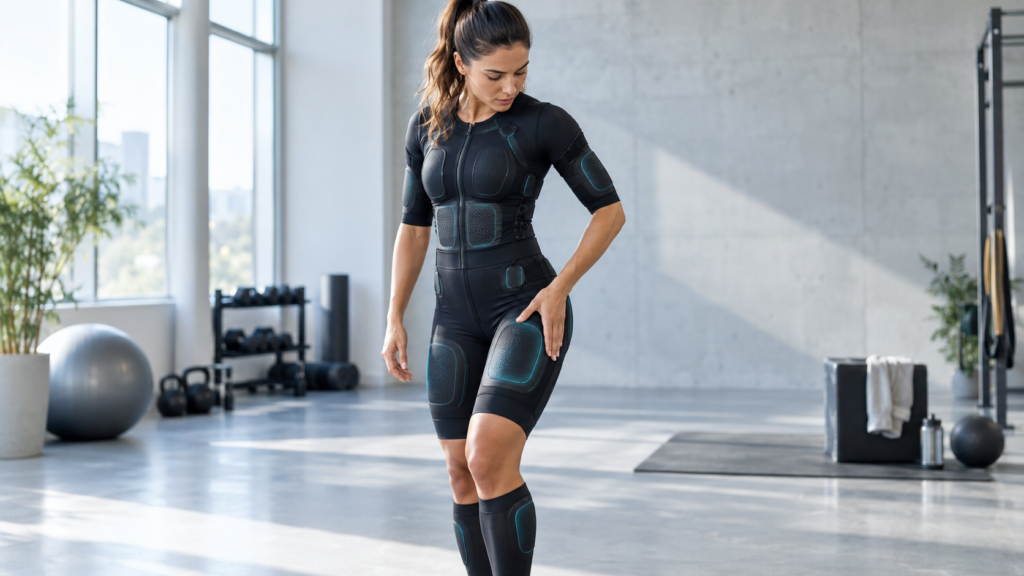
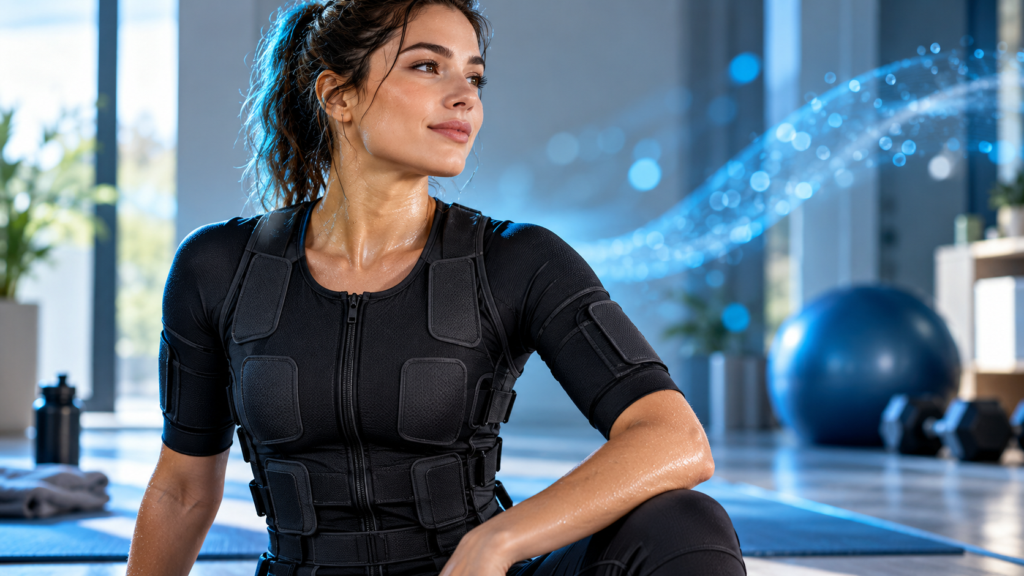
An EMS zone may feel faint in the first minutes of a session and feel more even once your body warms up. It may also become unexpectedly sharp when sweat collects unevenly. Both changes involve the electrode-skin interface, but they do not mean the user should keep raising or lowering intensity without checking contact.
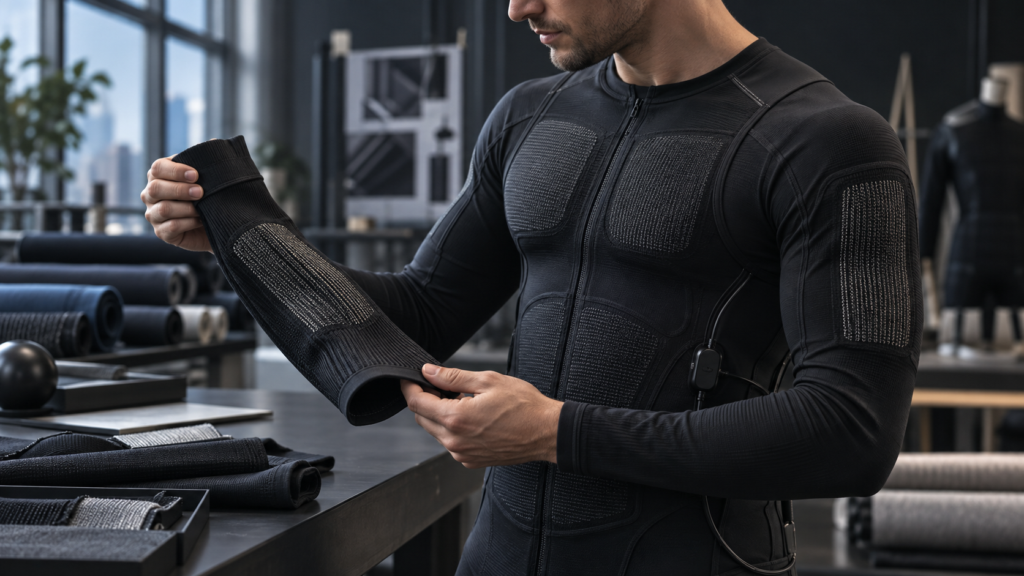
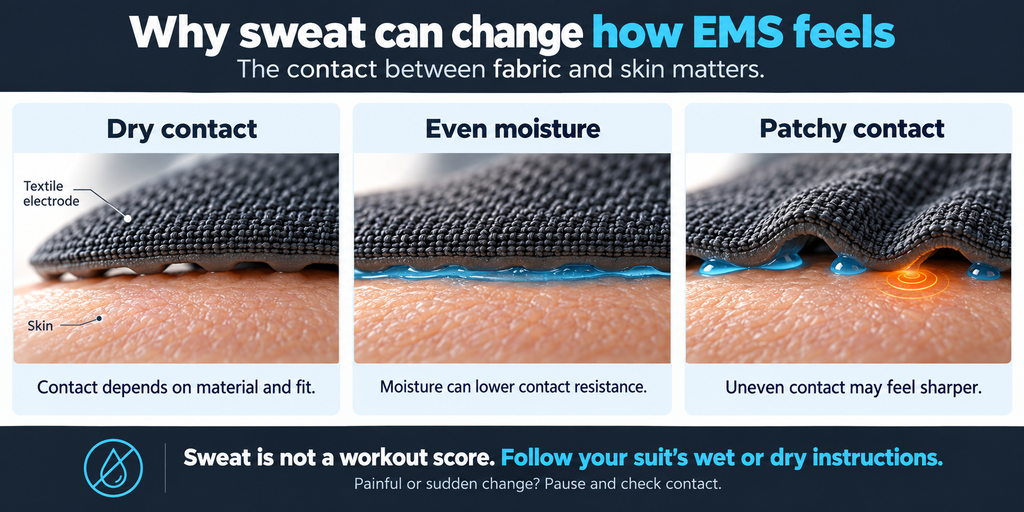
Sweat changes moisture and dissolved-ion conditions at the skin. In a textile electrode, it can lower interface impedance and expand the effective contact area. The effect depends on whether the suit is designed for wet or dry use, how evenly it fits, and where moisture accumulates.
EMS Sweat and Stimulation: Why moisture affects electrical contact
Dry outer skin resists current more than a well-prepared conductive interface. Water containing dissolved salts can improve conduction between skin and an electrode.
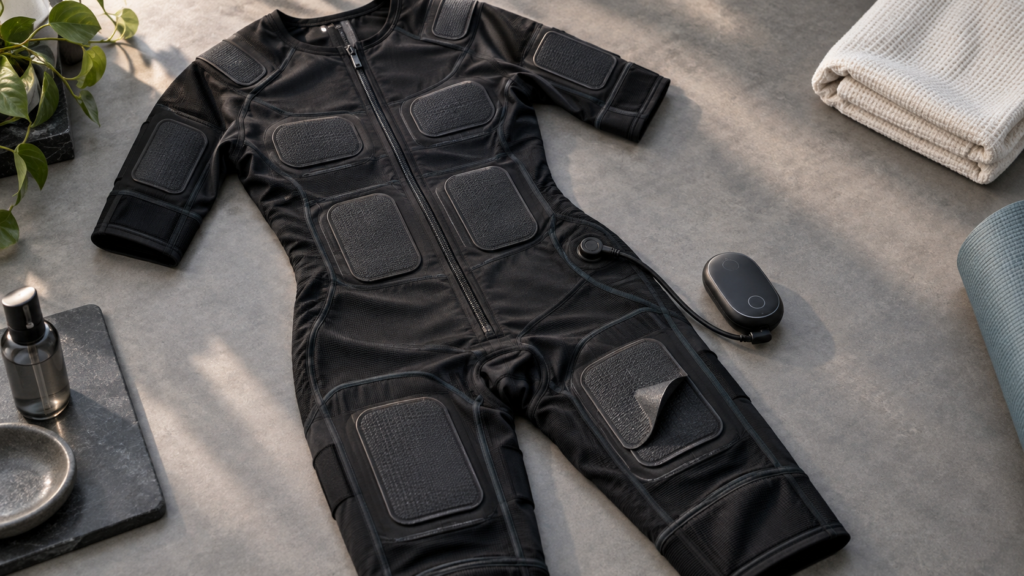
That is why many wet-electrode EMS systems instruct users to dampen electrode surfaces before putting on the suit. It is also why some dry-textile systems feel different after warmth and perspiration develop.
Moisture is not the only factor. Compression, electrode material, hair, lotion, and movement affect the interface too.
What research on textile electrodes shows
A laboratory and human study compared dry textile, wet textile, and hydrogel stimulation electrodes. The wet textile electrode showed motor-threshold and comfort performance similar to the hydrogel electrode in the tested participants. The dry textile electrode had a lower pain threshold and more cutaneous discomfort under those experimental conditions.
A newer randomized crossover trial found that textile electrodes used with moisturizing lotion performed similarly to hydrogel electrodes in comfort, consistency, and efficiency. These findings help explain the role of moisture, but they do not establish that every dry EMS suit should be wetted. Commercial systems use different materials, compression, output, and safety controls.
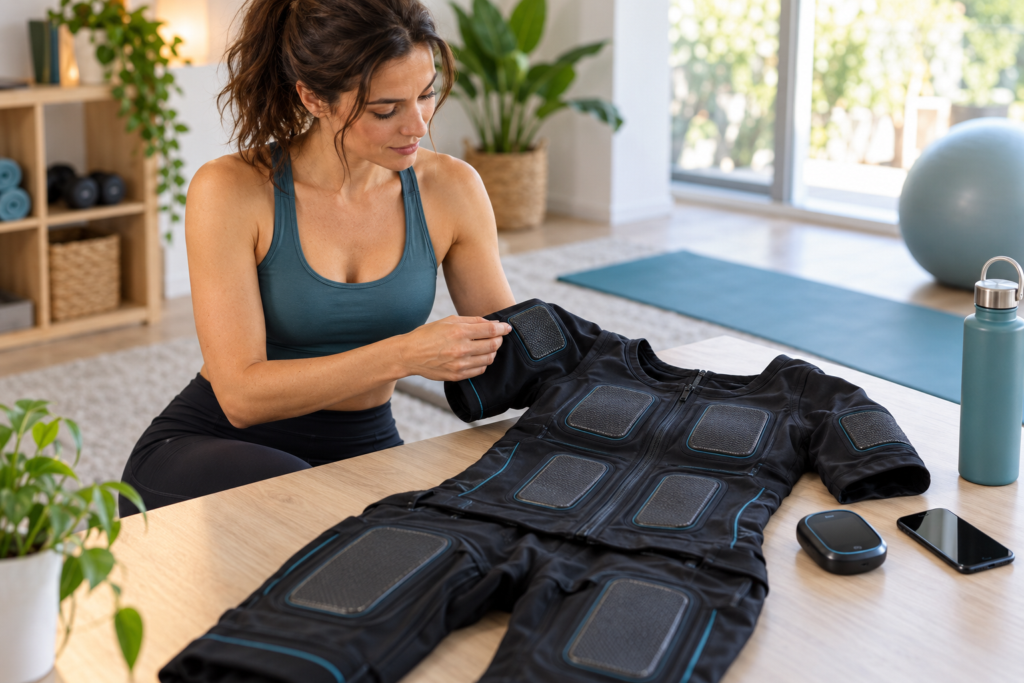
Wet-electrode suits: even preparation matters
In a system designed to be dampened, patchy wetting can create patchy stimulation. A soaked center and dry edge do not create the same interface as an evenly damp electrode.
Follow the manufacturer’s amount and application method. StimaWELL instructions, for example, tell users of its system to moisten electrode surfaces rather than spray the whole suit. Another product may specify a damp base layer or a different procedure.
Do not saturate connectors, controllers, or batteries. More water is not automatically better.
Dry-electrode suits: do not improvise
A dry-contact suit is designed to operate without deliberate wetting. Its material, garment pressure, and electronics may account for the expected interface.
Adding water or gel can violate instructions, alter current distribution, damage components, or create hygiene problems. If a dry zone feels weak before warm-up, use only the brand’s recommended preparation and progression.
Why sweat can make EMS feel stronger
If moisture lowers contact impedance or increases the area conducting current, the user may experience a clearer or stronger sensation at the same displayed setting. A constant-current and constant-voltage device can respond differently as impedance changes, although both remain bounded by their design.
The sensation change is not proof that the muscle suddenly receives a standardized larger “dose.” Pulse parameters, regulation method, and zone output remain device-specific.
Our article on constant current vs constant voltage EMS explains the electrical distinction.
Why sweat can also create sharp spots
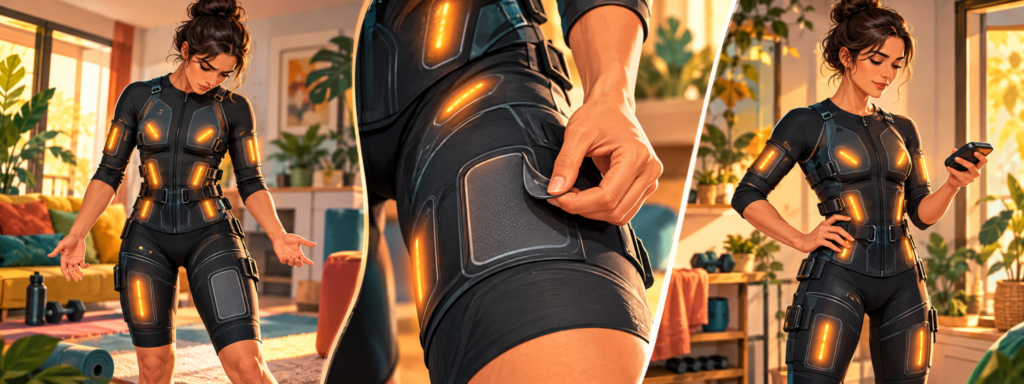
Sweat does not always spread evenly. It can collect along a seam, under an electrode edge, or in a skin fold. Movement can push moisture away from another area. A wrinkled panel may still contact only a narrow strip.
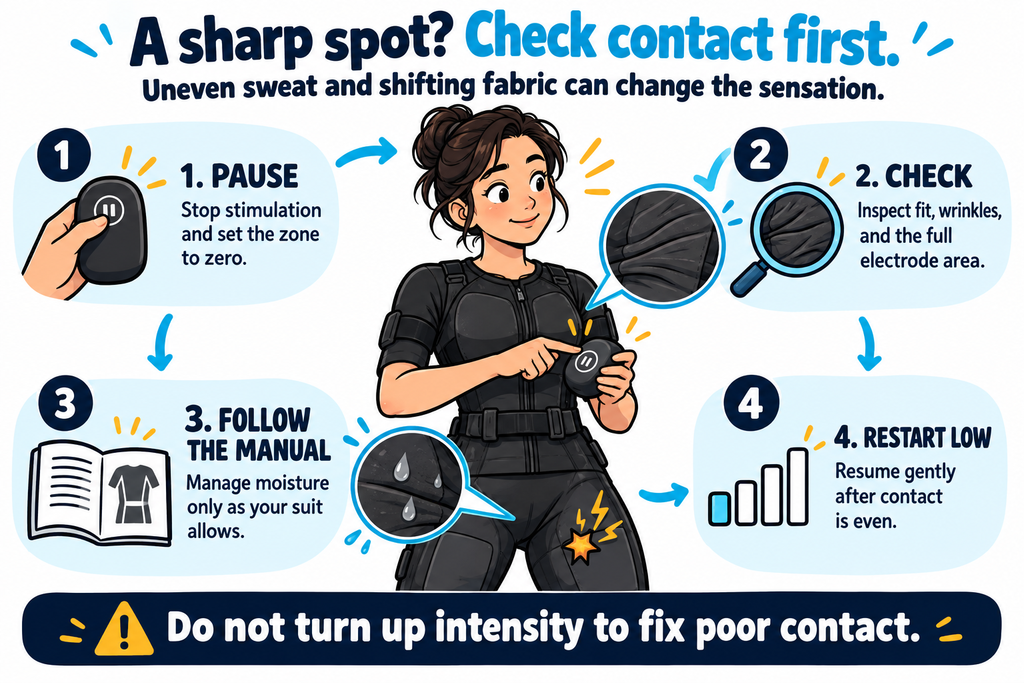
If sensation becomes localized or painful:
- Pause stimulation.
- Return the zone to zero.
- Inspect fit and the full conductive area.
- Dry or redistribute moisture only as the manual allows.
- Restart at a low level after contact is even.
Use the patchy EMS electrode contact checklist for a complete process.
Do not chase the first-minute intensity
Setting every zone high before the interface stabilizes can lead to an uncomfortable jump later in the warm-up. Use the device’s introductory sequence and increase gradually.
If the manufacturer expects a warm-up, wait until the suit is operating under its normal conditions before fine-tuning each zone. The goal is a controlled session, not reaching a target percentage as quickly as possible.
Sweat, hygiene, and garment care
Sweat leaves salts, oils, and microorganisms in fabric. Over time, residue can affect odor, skin comfort, and potentially electrode performance.
After training:
- Remove electronics as instructed.
- Do not leave the suit damp in a closed bag.
- Wash at the specified frequency and method.
- Let every layer dry fully before storage.
- Inspect conductive areas for residue or wear.
The existing wireless EMS suit maintenance guide covers general care. The care label for the actual suit remains authoritative.
Frequently asked questions
Is sweating required for EMS to work?
No universal rule applies. Wet-electrode systems require their specified moisture preparation; dry systems are designed differently. Follow the product instructions.
Why does EMS feel stronger halfway through a session?
Warmth, sweat, posture, fatigue, and changing garment contact can all contribute. Reduce or pause output if the change is abrupt or uncomfortable.
Can I spray water on a dry EMS suit?
Not unless the manufacturer explicitly instructs it. Unapproved moisture can damage the system or alter current distribution.
Does more sweat mean a better workout?
No. Sweat primarily reflects thermoregulation and environment. It is not a measure of EMS effectiveness or muscle recruitment.
The practical takeaway
Sweat changes the interface between skin and a textile electrode. It can improve broad contact, but uneven moisture can also create localized sensation. Wet and dry suits manage that interface differently.
Use the device-specific preparation method, progress gradually after the interface stabilizes, and stop to correct sharp or uneven contact. Never use sweat or a displayed intensity number as proof of workout quality.