Electrode size is not a cosmetic feature. It changes the area over which current enters the body, influences current density, and can affect comfort and the amount of current needed to produce a contraction.
Larger does not always mean better, and smaller does not automatically mean more precise. Muscle depth, anatomy, electrode placement, waveform, amplitude, and the task all matter. An EMS suit should be used with the electrode geometry it was designed and tested to use.
What is current density?
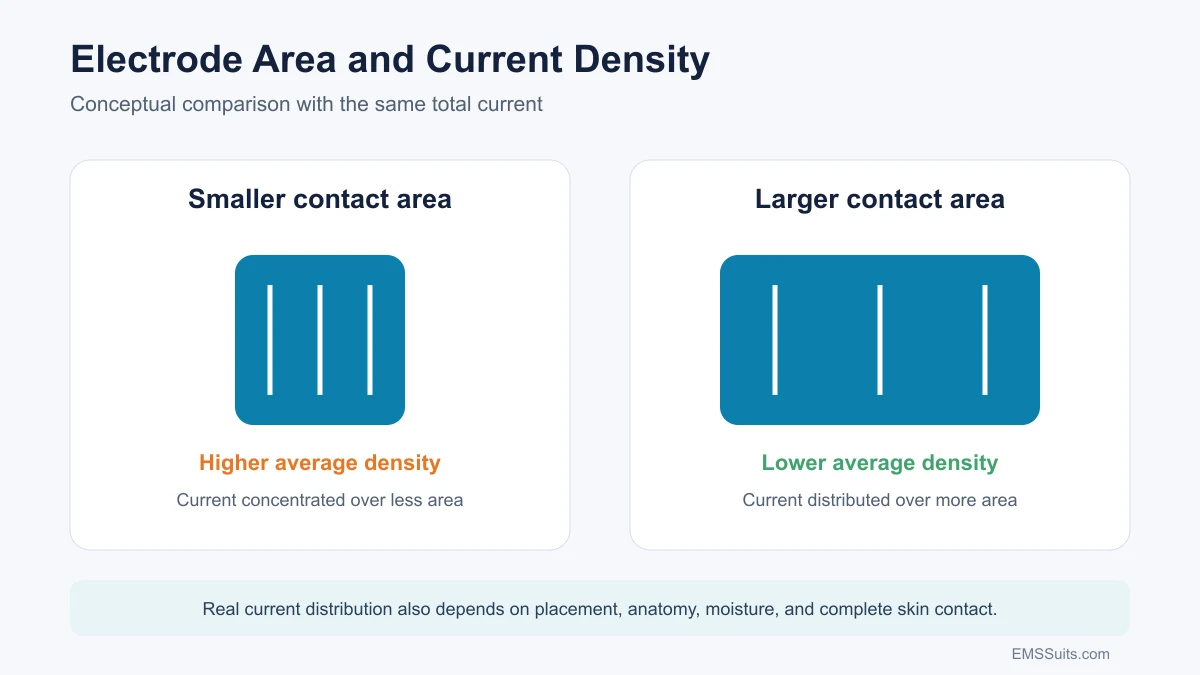
Current density describes current relative to conductive electrode area. A simplified calculation is:
Current density = current ÷ conductive area
If the same total current is delivered through a smaller area, average current density is higher. Real skin-electrode current is not perfectly uniform, so this calculation is an engineering summary rather than a map of every local “hot spot.” Edges, wrinkles, dry areas, and incomplete contact can make distribution less even.
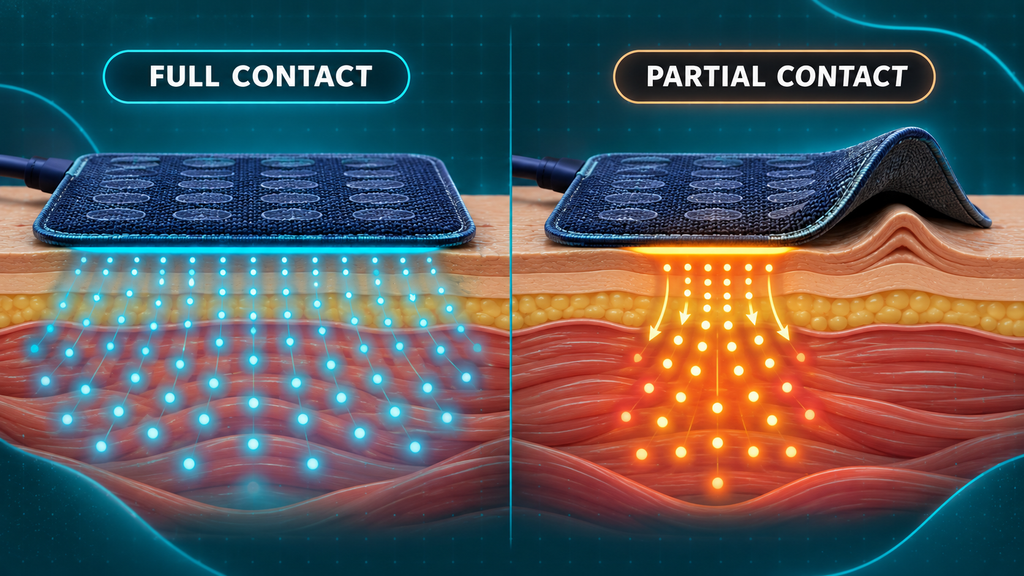
Why a partly attached electrode acts smaller
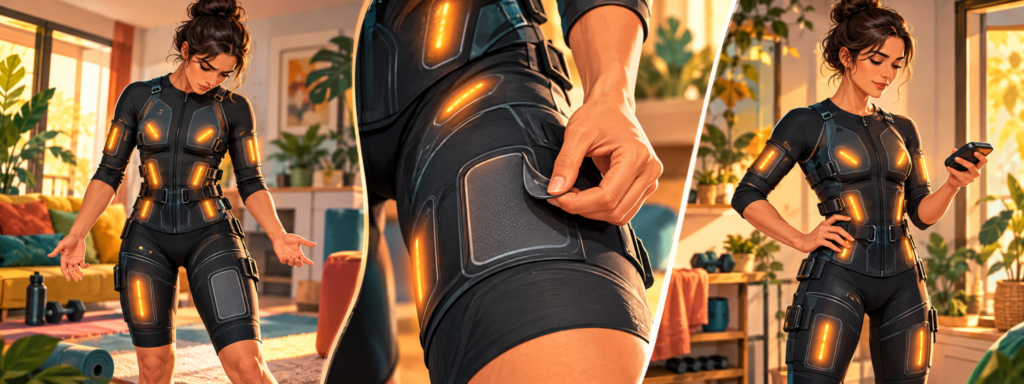
The printed dimensions of an electrode do not guarantee that its entire surface is contacting the skin. If half of a textile pad lifts or remains dry, the effective conductive area may be reduced. Current can concentrate through the portion still connected.
That is why poor contact can feel sharp or patchy even when the device level has not changed. Stop and correct the garment, moisture, or electrode condition instead of trying to tolerate the sensation.
What research says about electrode size and comfort
A 2022 study tested three electrode sizes and several placements over quadriceps, hamstrings, and gluteal muscles in 15 healthy participants. The two larger electrodes—5 × 5 cm and 5 × 9 cm—were more comfortable and required less current density for visible contraction than the 2 × 2 cm electrodes in that low-intensity NMES experiment.
Earlier work on the gastrocnemius also found that electrode size affected electrical requirements, comfort, and force. In one study of 20 healthy adults, larger electrodes improved comfort for the same plantar-flexion force, although total current and phase charge changed with size.
Results are not identical in every anatomy or setup. A modeling and human study of forearm stimulation found that preferred electrode size depended on fat thickness and nerve depth. This supports a cautious conclusion: electrode size must be matched to anatomy and the intended target rather than selected by one universal rule.
Placement can matter as much as area
An electrode placed near an accessible motor point may produce a contraction at a lower amplitude than one placed poorly. The 2022 study found that practical placement affected both comfort and the current needed for contraction across the tested muscles.
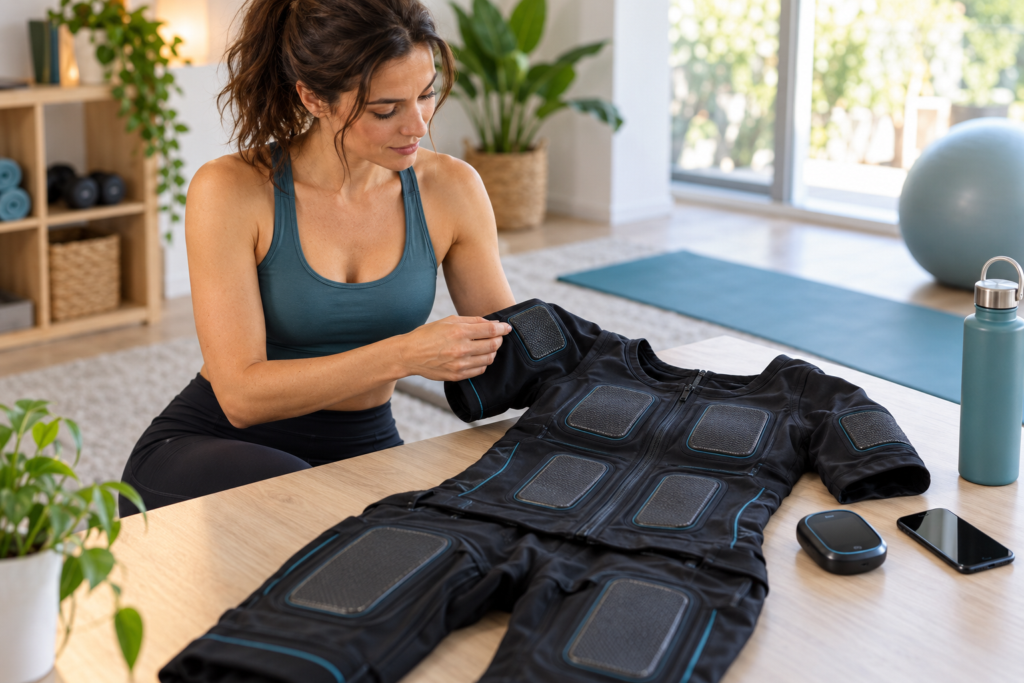
Whole-body suit users generally cannot reposition sewn electrodes. Fit becomes the placement mechanism. The garment must align its conductive panels with the intended regions without twisting or leaving gaps.
Small electrodes and selectivity
A small electrode can focus stimulation over a limited surface region, but higher current density may reduce comfort. Selectivity also depends on nerve depth and the return electrode configuration.
It is misleading to claim that a tiny pad always isolates one muscle. Current spreads through tissue, and nearby sensory and motor fibers can be activated. Engineers balance selectivity, comfort, and the output required for the task.
Large electrodes and current requirements
A larger electrode distributes current over more area, which can reduce average density at a given current. It may require more total current to reach the desired field at depth, yet still feel more comfortable because the surface load is spread out.
This is why comparing milliamperes without electrode area is incomplete. The FDA’s powered muscle stimulator guidance asks manufacturers to calculate maximum current and power density using the smallest conductive electrode area recommended for the unit.
Electrode size in an EMS suit
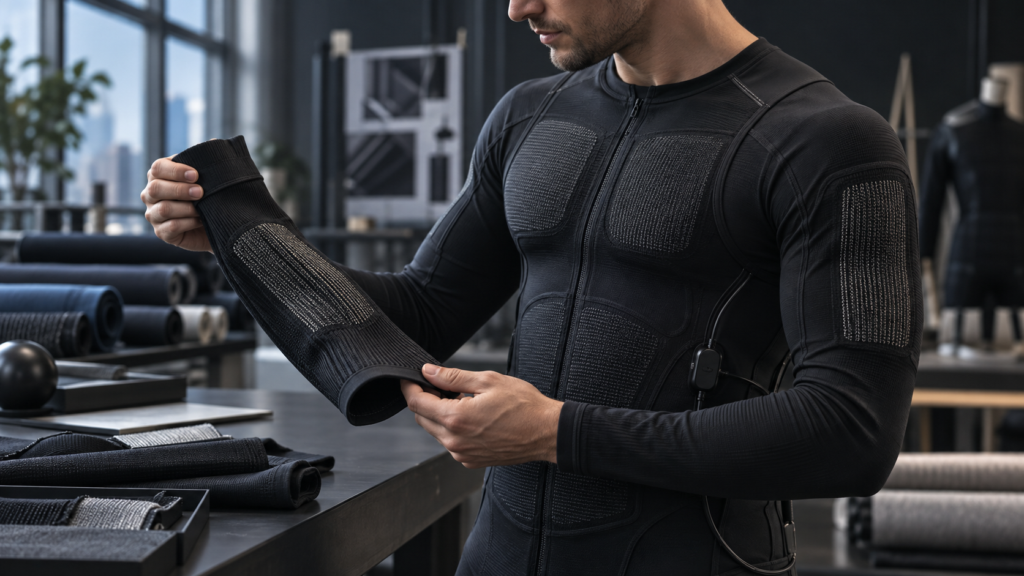
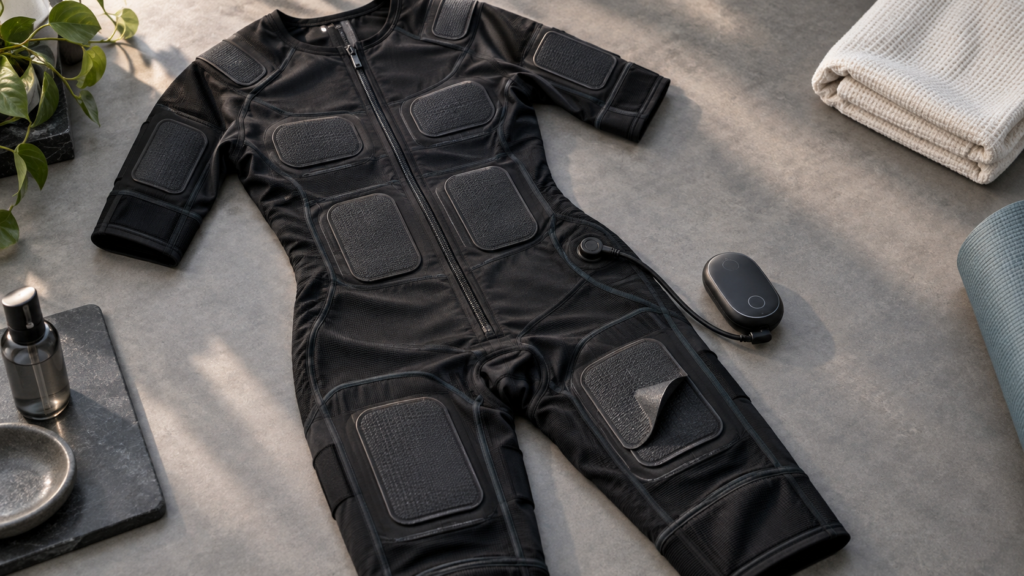
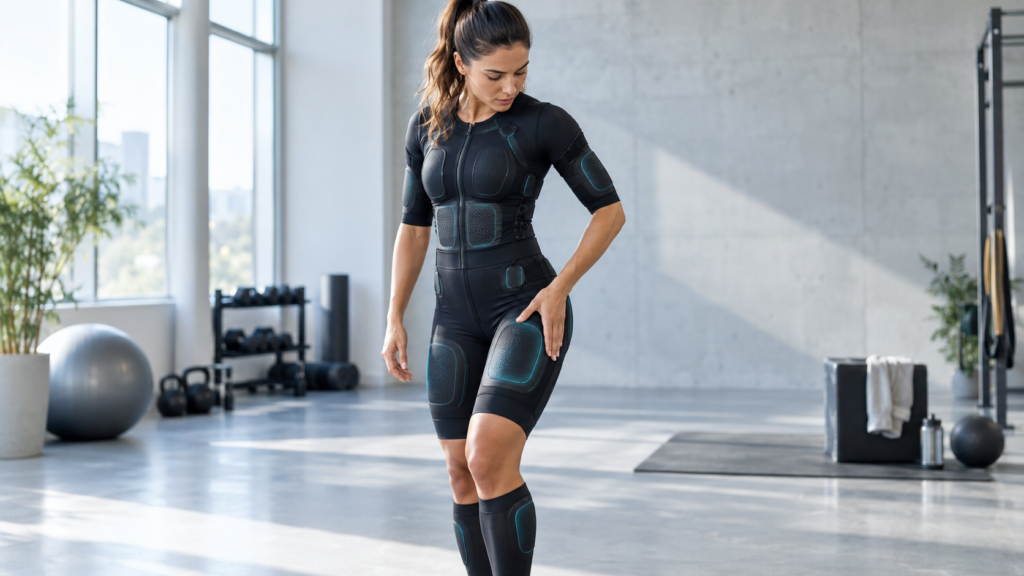
Integrated suit electrodes are shaped to cover broad muscle regions while remaining flexible. Their effective performance depends on:
- Conductive textile area.
- Garment compression.
- Moisture requirements.
- Stitching and conductor routing.
- Stretch while moving.
- Electrode wear after washing.
Do not trim, fold, tape over, or supplement an integrated electrode unless the manufacturer explicitly provides that procedure. Changing the conductive area can change current distribution and output behavior.
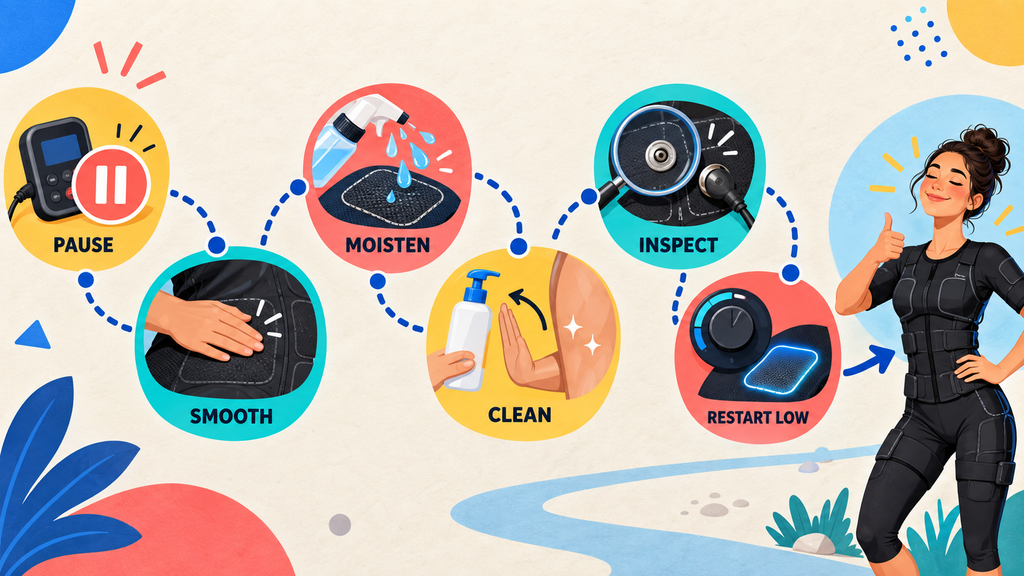
How to troubleshoot a sharp electrode area
If one spot feels sharper than the surrounding zone:
- Pause stimulation.
- Check for garment wrinkles or lifted edges.
- Confirm the electrode has the required moisture.
- Remove lotions or oils according to the manual.
- Inspect the textile, snap, and connector for damage.
- Restart at a low level only after contact is even.
Stop using a damaged electrode. Persistent pain, skin injury, or an unusual reaction should not be treated as a normal part of EMS.
Frequently asked questions
Do larger EMS electrodes feel weaker?
They may feel less sharp because current is distributed over more area, but sensation and muscle response depend on output, placement, anatomy, and contact.
Are small electrodes more accurate?
They can be more spatially selective in some applications, but smaller area can increase current density and discomfort. Accuracy is not determined by size alone.
Can I replace an electrode with a different size?
Only use electrodes the manufacturer lists as compatible. Changing size can alter current and power density and may exceed the device’s validated configuration.
Why does an electrode edge sting?
An edge may have incomplete contact, dryness, folding, or wear. Stop and inspect it rather than raising the intensity.
The practical takeaway
EMS electrode size changes current density, comfort, and the relationship between total output and muscle response. Research often finds comfort benefits from appropriately larger electrodes, but the best area and placement depend on anatomy and purpose.
For suit users, preserve the designed electrode area through correct fit, moisture, cleaning, and inspection. For equipment comparisons, read electrode area alongside current, waveform, and stated test conditions.
For related setup checks, see how EMS suit fit affects contact, why electrode contact becomes patchy, and how to inspect replacement EMS electrodes.